
FREEDOM IN DISHONORED: HOW ARKANE TURNED GAMEPLAY INTO PHILOSOPHY
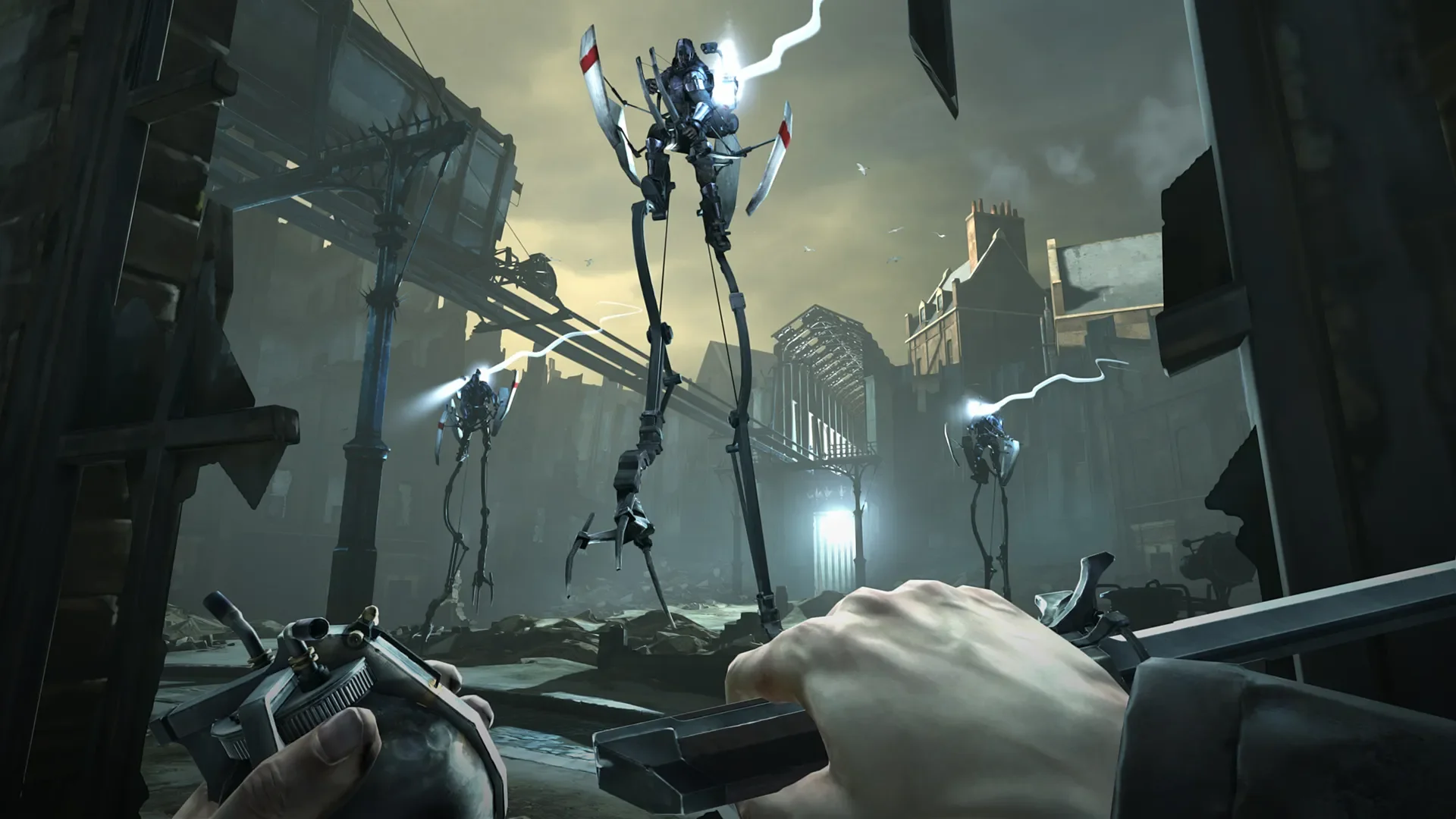
Image taken from https://www.arkane-studios.com/en
When Dishonored released in 2012, it was praised as a stealth-action game that let players approach every mission however they wished. But beneath its Victorian steampunk setting and supernatural powers lies something far more radical: a philosophy of freedom, morality, and consequence built directly into its systems.
Dishonored persuades by procedure. Arkane Studios designed it so that how you play is what shapes the narrative. In other words, the game itself becomes an argument, a playable philosophy. But how does it accomplish that ?
The Chaos System: Consequence Without Morality
At the heart of Dishonored is the Chaos system, which tracks how violently you play. Kill often, and Dunwall spirals into plague, paranoia, and militarization. Play non-lethally, and the world grows less hostile. But here’s the trick: the game never calls these choices “good” or “evil.”
Instead, morality is procedural. Consequences emerge from actions, not from a binary scale. This echoes Jean-Paul Sartre’s idea that humans are “condemned to be free”: every choice we make carries responsibility, and meaning is not pre-given but created through action. In Dishonored, you can’t escape that weight. Even inaction is a choice.
Level Design as Existential Choice
Freedom in Dishonored is not just about morality but also about movement. Every mission is a miniature labyrinth of possibilities: rooftops, alleys, sewers, or front gates. Each path is valid, but none is prescribed.
This reflects Arkane’s deeper design philosophy: sure, levels contain story, but they primarily stage subjectivity. The player becomes the author of their own journey, charting meaning through traversal. Yet, and here lies the paradox, all paths lead to the same conclusion. The journey matters more than the destination, a reminder that freedom is not about escaping structure but about navigating within it.
Optionality and Subjectivity
Side quests and hidden objectives further decentralize the narrative. They rarely alter the main plot but reshape the experience of playing. Saving an oppressed civilian, uncovering a conspiracy, or sparing an enemy adds layers of meaning without being “necessary.”
Here Arkane plays with Jacques Derrida’s notion of différance: meaning is never fixed, only deferred through interpretation. These optional choices act as traces, absences that still shape the whole. By allowing meaning to emerge through small, optional acts, Dishonored destabilizes the idea of a single “true” reading of the game.
Dishonored as Playable Philosophy
Finally, what makes Dishonored remarkable is not just its story of betrayal and revenge but how it enacts philosophy through play.
Through the Chaos system, it stages Sartre’s existential responsibility.
Through its open levels, it dramatizes the tension between freedom and constraint.
Through side quests, it embodies Derrida’s endless play of interpretation.
Dishonored creates a space where players live philosophical concepts. It is less a narrative about revenge than a system about freedom, consequence, and meaning.
That is why, more than a decade later, Dishonored remains a masterpiece: not only of stealth game design, but of philosophy made playable, of procedural rhetoric.
If interested, we recommend reading the full thesis on Dishonored and Procedural Rhetoric.
