
PROCEDURAL RHETORIC: THE MOST POWERFUL FORM OF PERSUASION
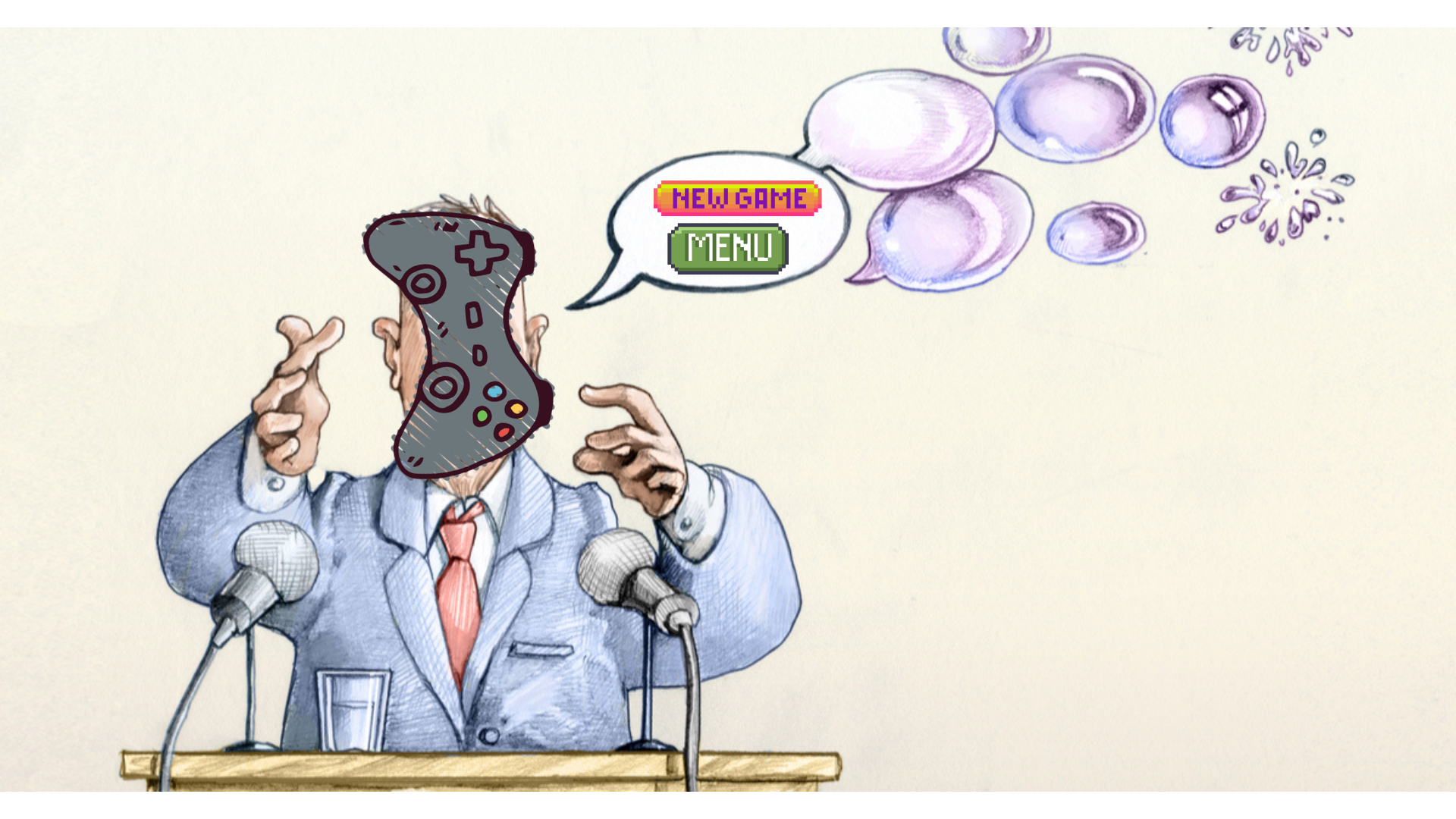
Procedural rhetoric often feels elusive because it does not operate where we expect rhetoric to live. When we think of persuasion, we imagine speeches, manifestos, cinematic monologues, political ads, or emotionally charged dialogue. We look for statements. We look for claims. We look for language. When someone defines procedural rhetoric as persuasion through mechanics, the phrase sounds clinical. It lacks imagery. It lacks narrative drama. It sounds like boring theory on a monday morning.
But games function differently from other media. They require players to operate within them. The persuasive force lies not in what is displayed, but in what must be done. You do not watch efficiency rewarded. You perform it. You do not observe scarcity framed as tragic. You manage it. Procedural rhetoric lives in constraint, reward, repetition, and consequence. That location makes it harder to see. It also makes it more powerful.
Layers of Media, Layers of Rhetoric
To understand procedural rhetoric, it helps to step back and look at how media evolved. Each dominant medium in history added a new layer of expressive capacity, and with it, a new rhetorical dimension.
The earliest form is voice. Spoken language allows persuasion through tone, emphasis, pacing, and argument. A speech convinces through rhetoric alone. The persuasive force lies in what is said and how it is delivered.
Writing expanded this capacity. Books introduced permanence. They combined spoken rhetoric with narrative rhetoric. Ideas could unfold over time. Characters could embody arguments. Structure itself became persuasive.
Music added another layer. Songs operate through written lyrics and vocal rhetoric, but also through auditive rhetoric. Melody, rhythm, harmony, and tempo shape emotion directly. Persuasion no longer relied solely on language. Sound itself carried meaning.
Film combined these dimensions. Written scripts, spoken dialogue, music, and visual framing converged into a multi-layered medium. Movies employ rhetoric, narrative rhetoric, auditive rhetoric, and visual rhetoric simultaneously. A camera angle persuades. A soundtrack guides emotion. Editing creates emphasis. Meaning is constructed through representation across sensory channels.
Games inherit all of these layers. They contain writing. They contain spoken dialogue. They use music and sound design. They employ visual rhetoric through framing, lighting, and composition. Yet they add something new: interaction. With interaction comes procedural rhetoric. Meaning is no longer confined to what is shown or told. It emerges from what is allowed, rewarded, punished, or constrained.
From Representation to Participation
When a game rewards accumulation, players accumulate. When it rewards elimination, players eliminate. When it structures progress around optimization, players begin to optimize. These behaviors are not symbolic gestures. They are repeated actions and repetition matters.
Consider a simple crafting loop. Gather resources. Convert them into tools. Use those tools to gather more ressources efficiently. The system never states that productivity is virtuous. Yet the reward structure quietly associates efficiency with advancement. After dozens of hours, that association becomes intuitive. Efficiency feels natural. Waste feels wrong.
The same logic applies to cooperation. If a game’s mechanics make solo play inefficient and group coordination optimal, players begin to value cooperation structurally. Not because the narrative praised teamwork, but because the system rewarded it. Conversely, if competition generates faster progression, rivalry becomes normalized. Behavior adapts to structure.
Participation changes the persuasive equation. In passive media, audiences interpret meaning delivered to them. In interactive systems, meaning forms through action. A player who repeatedly succeeds by exploiting a mechanic internalizes the logic of that mechanic. It feels earned. It feels discovered. That sense of self-generated insight strengthens the effect. The player believes they arrived at the conclusion independently.
Procedural rhetoric persuades through practice.
Fixed Meaning and Emergent Meaning
Traditional rhetoric operates through relatively fixed meaning. A speech argues for policy. A novel explores a moral theme. A documentary frames a historical interpretation. Audiences may disagree, reinterpret, or resist, yet the core message remains anchored in authored expression.
Procedural rhetoric separates structure from conclusion. The rules may be fixed, but the meaning is not.
Two players can inhabit the same system and derive different interpretations. One player might experience a scarcity mechanic as a lesson in sustainability. Another might interpret it as a challenge to exploit the system more aggressively. The system does not necessarily dictate the takeaway. It defines the boundaries within which takeaways emerge.
This distinction is crucial. Procedural rhetoric persuades by shaping possibility rather than prescribing belief. It defines what is viable, what is rewarded, what is punished. Within those constraints, players generate meaning. The process feels personal. It feels experiential.
Because the meaning emerges through interaction, it often carries deeper persuasive force. We tend to trust conclusions we believe we formed ourselves. When a mechanic repeatedly reinforces a pattern, that pattern becomes internalized not as argument, but as experience. The rhetoric hides inside the rules.
Culture Without Intent
Recognizing this power does not require assuming malicious design. Most developers are not constructing ideological machines of mass propaganda. They are solving problems. They tune numbers, refine pacing, adjust difficulty curves. Engagement, clarity, and balance drive decisions.
Yet, cultural expression does not require conscious intent.
When a system consistently rewards extraction over preservation, it encodes a relationship to resources. When advancement depends on domination, it normalizes hierarchy. When success correlates with relentless productivity, it reinforces certain assumptions about value. These patterns mirror broader cultural logics whether designers consciously intend them to or not.
Culture spreads through repetition. Habits form through reinforcement. Over time, behaviors practiced in virtual systems can shape expectations about real ones. Not through direct indoctrination, but through normalization. When something feels intuitive after sustained interaction, it becomes easier to accept elsewhere.
Procedural rhetoric participates in cultural reproduction. Mechanics rehearse patterns of thought. The rehearsal may be subtle, but its influence accumulates.
The Marketing Horizon
The implications become sharper when viewed through the lens of marketing, where brands seek out visibility and distinction. Traditional product placement operates through exposure. A brand appears in a film. A logo lingers in a scene. The audience registers familiarity. The persuasive mechanism is visible.
Interactive systems offer a deeper channel. Imagine progression tied to specific in-game tools modeled after real product categories. Imagine status associated with particular aesthetic brands. Imagine crafting efficiency subtly aligned with recognizable equipment design. Imagine if drinking a Coca-Cola gave you a full heal effect, but drinking the blue soda can gave you a weaker one. The association would not arise through observation alone. It would arise through use.
Dependency creates attachment. Wherein, habit reinforces preference.
In persistent online environments, where players invest hundreds of hours, the potential integration between system design and marketplace logic expands. Cosmetic economies already operate this way. Skins signal prestige and ownership signals a form of commitment. The line between play and commerce blurs.
Procedural rhetoric does not need overt messaging to shape preference. It only requires repetition within a rewarding structure.
Why Literacy Matters
Understanding procedural rhetoric does not require suspicion. It requires awareness.
Once players recognize that mechanics shape interpretation, they begin asking sharper questions. What behaviors are consistently rewarded. What values are embedded in progression systems. What identities are made viable through structure.
Games are among, if not the most dominant, cultural forms of the twenty first century. Their rhetoric operates through systems rather than speeches. They do not merely depict cool and fun worlds but construct rule-bound environments in which players practice habits. Meaning in interactive media is neither entirely fixed nor entirely free. It emerges within constraints, and those constraints matter.
Procedural rhetoric is the most powerful form of persuasion humanity has yet created.
