
THE ERA OF “FRIENDSLOP” GAMES - WHAT IS IT?
The Emergence of a Label
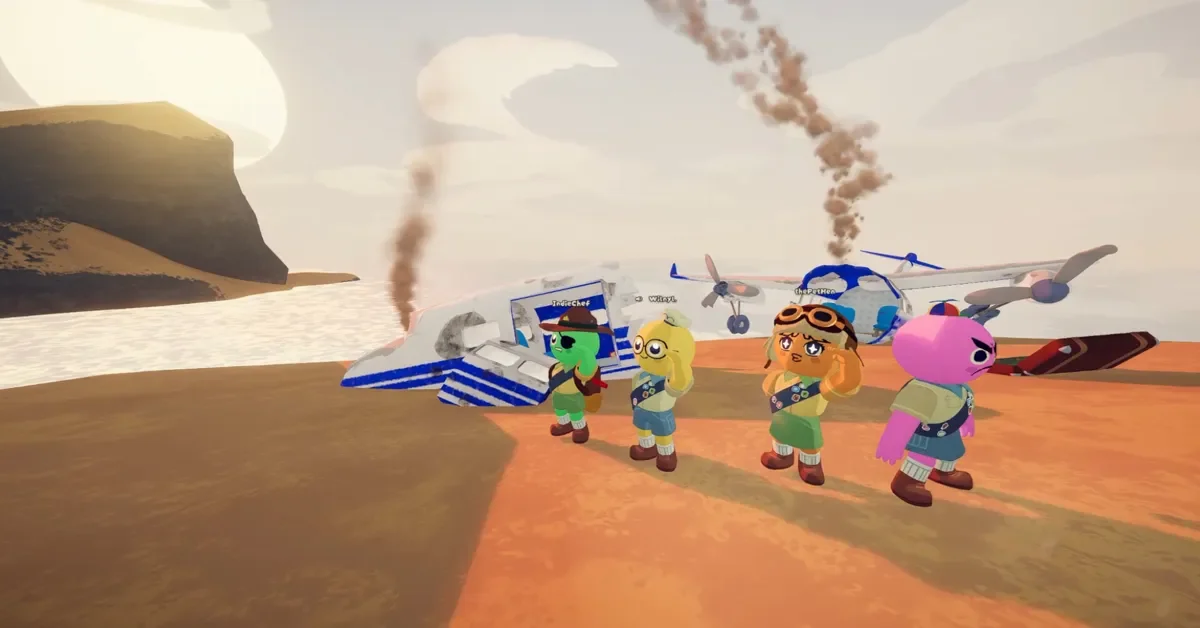
“Friendslop” is a semi-ironic term that emerged online to describe a particular wave of cooperative multiplayer games that thrive on chaos, jank, and shared absurdity. The word “slop” is intentionally provocative. It suggests messiness, rough edges, low polish, even disposability. Yet the “friends” qualifier changes everything. These games may look crude in isolation, but in a group setting they become magnetic.
Titles often associated with the label include Lethal Company, Content Warning, Phasmophobia, and R.E.P.O.. They are typically small to mid-budget projects with strong physics systems, proximity voice chat, procedural randomness, and minimal narrative framing. Individually, they can appear repetitive or mechanically thin. Collectively, they generate moments.
The label is not purely derogatory. It reflects a shift in what players value. Polish and graphical fidelity matter less than unpredictability and social friction. The appeal lies in what happens between players rather than what the game carefully authors.
The Mechanics of Chaos
Friendslop games share mechanical DNA. They rely on systemic unpredictability. Physics interactions produce slapstick outcomes. Proximity voice amplifies panic and miscommunication. Procedural generation ensures no two sessions unfold identically. Failure is common and often spectacular.
These systems flatten traditional skill hierarchies. Mastery is less important than improvisation. Precision gives way to reaction. A perfectly planned strategy can collapse because someone dropped an object, triggered an alarm, or panicked at the wrong moment. That instability is the point.
Importantly, many of these games are mechanically simple at their core. Objectives are straightforward. Controls are accessible. The depth does not come from layered combat systems or complex progression trees. It comes from interaction density. When four players occupy a fragile system built on physics and limited information, chaos scales quickly.
The design encourages performative failure. The funniest moments often arise from mistakes. Panic becomes content. Disaster becomes memory. The mechanics reward presence over perfection.
The Cultural Function
Friendslop is not only a design trend. It is a cultural one.
These games are optimized for shared experience. They thrive in voice chat. They thrive on streaming platforms. They produce clips effortlessly. A thirty second disaster can circulate widely online. The genre fits the attention economy without explicitly announcing that intent.
There is also an emotional component. In an era saturated with competitive ranking systems, esports optimization, and performance metrics, friendslop offers relief. The stakes feel lower. The absurdity feels communal. Social bonding becomes the primary output.
What looks like mechanical roughness may actually be strategic looseness. Systems that are too polished reduce unpredictability. Slight instability increases humor. The “slop” is often structural freedom.
Slop or a cultural Shift?
Friendslop signals a shift in multiplayer priorities. It suggests that shared chaos can matter more than authored narrative, that improvisation can outweigh mastery, and that jank can function as design texture rather than flaw.
These games are rarely elegant. They are rarely balanced with competitive precision. Yet they succeed because they understand something fundamental. In interactive media, meaning often emerges between players rather than from the system alone.
What appears messy on the surface may represent a deliberate embrace of social unpredictability. Whether the term “friendslop” remains ironic or becomes accepted taxonomy, the phenomenon it describes is real.
The question is no longer whether these games are polished. The question is what they reveal about how and why people play together today.
