
CRIMSON DESERT AND THE PROBLEM OF MODERN REVIEWERS
A Divisive Score
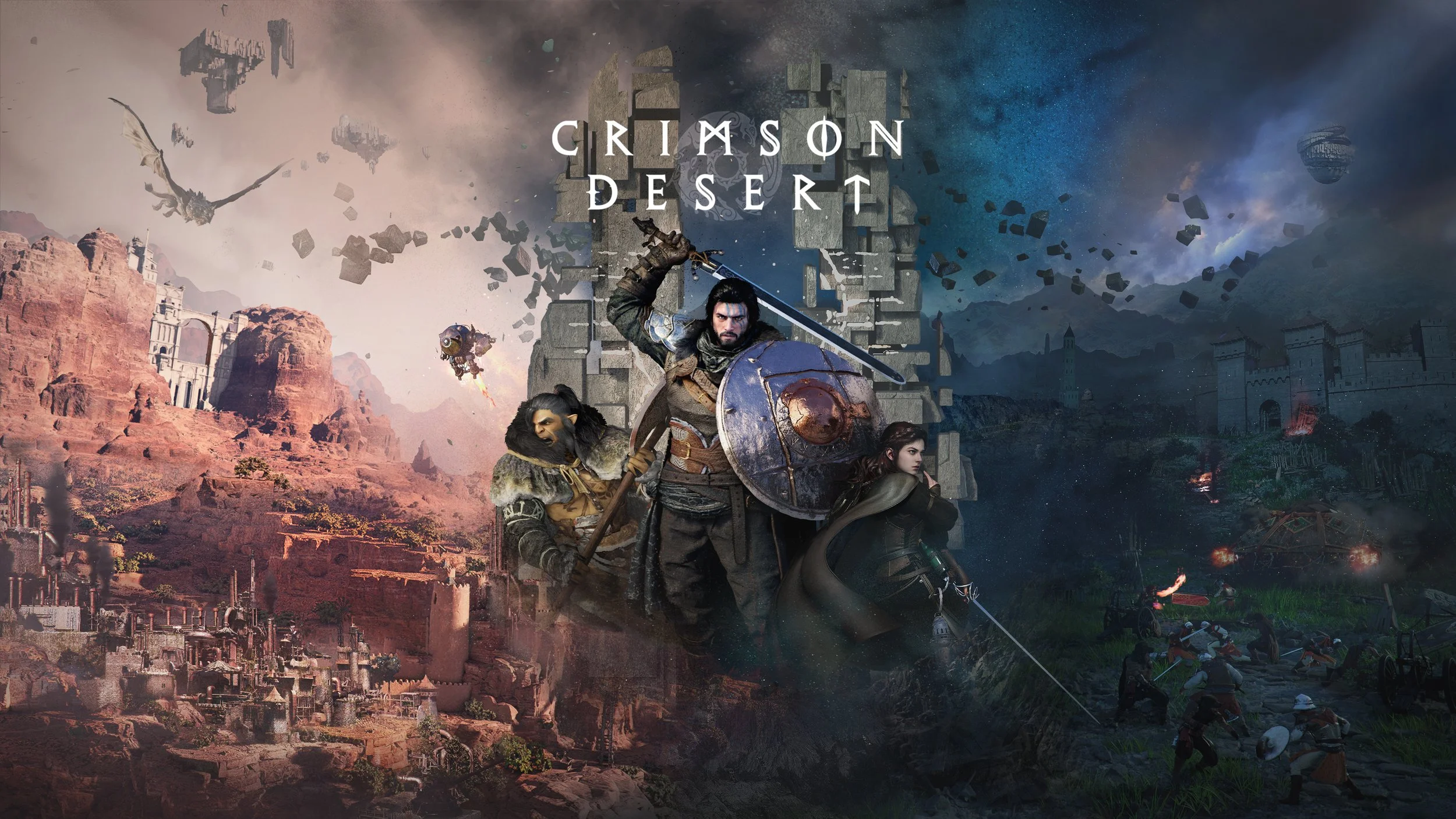
Few games have carried as much expectation as Crimson Desert. Years of trailers, technical showcases, and promises of scale built it up into something close to a flagship release. When early impressions and scores finally dropped, the reaction was immediate and split. A tentative 6/10 from IGN became the focal point. Some people saw validation. Others were confused. Not necessarily because the score felt wrong, but because it felt… incomplete.
That reaction says more about the review landscape than the game itself.
The Way We Review Games
Most modern reviews follow the same pattern. A reviewer gets access under embargo, plays as much as possible within a limited window, reaches an endpoint, then forms a verdict. That process works when the game is built to be consumed quickly. It starts to fall apart when the game resists that approach. Crimson Desert looks like one of those games.
Systems take time to unfold. Mechanics ask for patience. Early friction is part of the experience rather than something to smooth over. When a game is approached with the goal of finishing it quickly, that friction becomes the dominant impression. Depth rarely has time to surface. There is a difference here that often gets overlooked. Playing toward completion pushes the player forward. Playing for experience allows the player to sit in the systems, experiment, fail, and slowly understand what the game is doing. One approach compresses the experience. The other lets it breathe.
You can feel that difference in the way games are talked about.
Why FightinCowboy Stands Out
That is where FightingCowboy becomes interesting. His approach sits outside the usual review cycle. He spends time with games. He learns them. He lets systems reveal themselves instead of forcing an early conclusion. His take on Crimson Desert reflects that mindset. The game is demanding. Controls take time to learn. Progression requires effort. None of that is framed as a problem. It is part of the design. For players willing to engage with it, the experience opens up in ways that are easy to miss in a rushed playthrough.
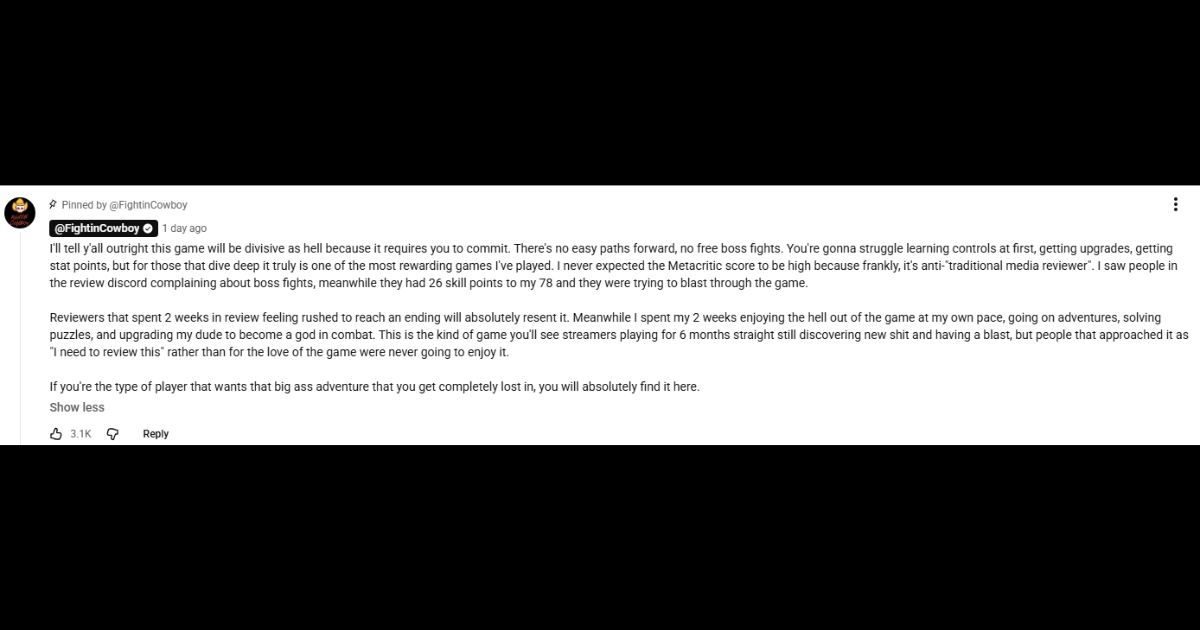
source: @FightinCowboy on Youtube
He also points to something that feels increasingly common. Reviewers who sprint toward the end tend to come away frustrated. Players who move at their own pace often find something much richer underneath. It is not about preference. It is about approach.
Scores Without Context
Looking at scores in isolation rarely tells the full story. Context matters, and it often gets lost.
IGN’s 6/10 sits next to scores like the 7/10 given to Highguard, a game that disappeared from conversation within weeks. That comparison is not about declaring a winner. It highlights how uneven the criteria can feel. Some elements are easy to evaluate quickly. Performance, accessibility, immediate responsiveness. Others take time. Systems that evolve over dozens of hours do not fit neatly into a tight review window. When those systems are judged too early, the result feels shallow.
You end up with reviews that capture the first layer of a game, sometimes the second. The deeper layers, the ones that shape long-term engagement, rarely make it into the final score. This is where a framework like PROC3SS becomes useful. Looking at representation, systems, and the production of subjectivity requires time inside the game. It requires attention to how meaning emerges through play. That kind of analysis cannot be rushed without losing what makes it valuable.
Taking a Different Approach
Games have changed. Many of them are no longer built for quick consumption. They are systems meant to be explored over time, sometimes slowly, sometimes unevenly. Reviewing them with the same cadence used for linear experiences creates a mismatch. At PROC3SS, the goal is simple. Take the time the game asks for. Understand its systems before passing judgment. Look at what it does on the surface, then go deeper. Ask what it produces in the player, not just what it presents.
Crimson Desert is exactly the kind of game that demands that approach.
Our review is coming, and it will take time.
But that is intentional.
