
DEADLOCK IS A GAME MADE BY VALVE
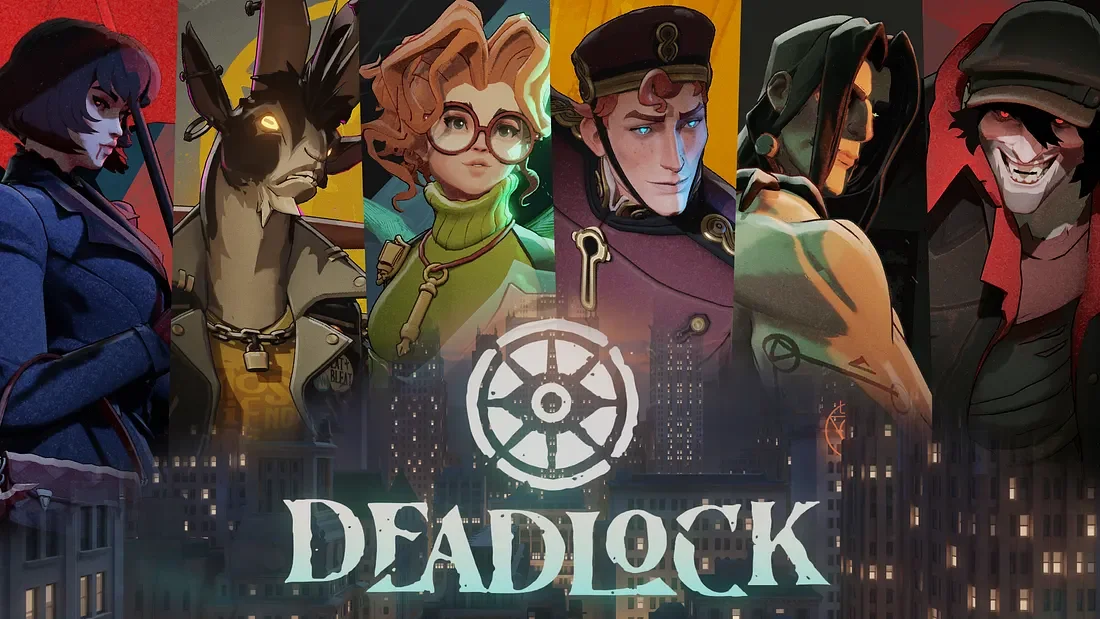
It is rare for a closed beta to outperform a fully released competitor, yet Deadlock has been doing exactly that. Despite limited access, invite-only entry, and almost no traditional marketing push, the game has already surpassed Marvel Rivals in active player counts at various points. That alone would be enough to raise eyebrows, but coming from Valve, it signals something more deliberate. Valve does not release frequently, and when it does, the project tends to anchor itself in the market for years. Early numbers do not guarantee long-term success, but they do reveal momentum, and Deadlock already has it.
What Deadlock Is Trying to Be
Deadlock sits in an unusual position between genres that rarely blend this tightly. It borrows the lane structure, objective focus, and progression systems of MOBAs, while grounding moment-to-moment play in shooter mechanics. Movement, aiming, and positioning feel immediate, yet the larger structure unfolds over time, creating a pacing that feels slower than traditional shooters but more active than most MOBAs. That balance is difficult to achieve, and it is where the game begins to distinguish itself.
Matches develop gradually. Early phases revolve around positioning, resource gain, and map awareness, while later stages escalate into coordinated engagements and control over key areas. The result is a rhythm that encourages both short-term decision making and long-term planning. Players coming from action games find enough familiarity to engage quickly, while those looking for depth have systems that reward sustained investment.
Why It Is Already Gaining Ground
Part of Deadlock’s early traction comes from how its systems are structured. The game does not aim for instant readability. It introduces complexity and expects players to work through it, which creates a different kind of engagement. Instead of exhausting its novelty quickly, it unfolds over time. That pacing aligns well with competitive communities, where mastery and discovery are part of the appeal.
Valve’s position in the industry also plays a role. There is an expectation attached to its releases, built over years of titles that sustain long-term player bases. That expectation feeds into early adoption. Even in a closed beta, players approach the game with the assumption that it will evolve, stabilize, and expand. That belief shapes behavior. Communities form earlier, strategies develop faster, and discussion around the game becomes more active.
The social layer reinforces this. As players invest time, roles begin to take shape, coordination improves, and the game starts to function as a shared system rather than a collection of individual matches. That transition is critical for any multiplayer title aiming for longevity, and Deadlock appears to be entering that phase already.
Marvel Rivals and the Limits of Immediate Appeal
By contrast, Marvel Rivals follows a more familiar model within the hero shooter space. Strong intellectual property, recognizable characters, and immediate accessibility define its appeal. Players can understand the game quickly, engage with it easily, and find short-term enjoyment without much friction.
That approach has advantages, especially in attracting a wide audience early on, but it also introduces a ceiling. When systems are designed for instant clarity, they risk revealing their limits just as quickly. Engagement peaks early and can decline once players feel they have seen what the game offers. Retention becomes more difficult when the experience stabilizes too soon.
Deadlock moves in the opposite direction. It accepts a steeper entry point in exchange for depth that unfolds over time. The game does not present everything at once. It requires adaptation, experimentation, and repeated play. That structure tends to hold players longer, even if it grows more slowly at the start.
A Shift in the Multiplayer Landscape
What Deadlock’s early performance suggests is a shift in what players are looking for. Accessibility and spectacle still matter, but they are no longer enough on their own. There is a growing demand for systems that sustain engagement over time, that reward learning, and that create space for mastery. Players are willing to invest effort if the return justifies it.
Valve’s approach reflects that shift. Rather than chasing the most immediate form of appeal, Deadlock builds toward longevity. It combines familiar structures in a way that feels stable, layered, and capable of supporting long-term play. If the current trajectory continues, it will not simply compete within the hero shooter space. It will reshape expectations around it.
For now, the game remains in closed beta, but the signal is already clear. The numbers are not just a curiosity. They are an early indication of where the market may be heading.
