
The closure of BioWare on October 21 marked the end of one of gaming's most influential role-playing studios, bringing more than three decades of development to an abrupt conclusion. Responsible for franchises such as Baldur's Gate, Dragon Age, and Mass Effect, the Canadian developer helped establish many of the narrative conventions that continue to shape modern RPGs. Its closure was accompanied by approximately 400 layoffs across Electronic Arts and the cancellation of the next Mass Effect installment, leaving players questioning how a studio with such an extraordinary legacy could disappear under one of the industry's largest publishers. New reporting from Bloomberg journalist Jason Schreier, published on October 30, offers a revealing explanation. According to sources familiar with EA's internal deliberations, the publisher reportedly chose to prioritize a new Star Wars Battlefront game over the continuation of Mass Effect, considering the former a more commercially predictable investment. The decision was influenced by several factors, including BioWare's recent commercial difficulties and the enormous financial obligations created by EA's $55 billion acquisition earlier this year.

The reported choice between Mass Effect and Star Wars illustrates an increasingly significant problem within AAA development. Both projects were expected to require investments reaching hundreds of millions of dollars, placing considerable pressure on EA to evaluate their potential returns against the financial risks associated with production. Following its acquisition by a consortium led by Saudi Arabia's Public Investment Fund, the company reportedly faces approximately $18 billion in debt, creating incentives to prioritize projects capable of generating more predictable revenue. Under these circumstances, a multiplayer shooter built around one of the world's most recognizable entertainment franchises becomes an attractive proposition, particularly when compared with a narrative-driven RPG requiring years of development, extensive writing, and complex player-driven systems. Mass Effect's emphasis on branching decisions, character relationships, and narrative consequences creates considerable production demands, while its commercial performance depends heavily on the reception of a largely self-contained experience. Battlefront, by comparison, offers opportunities for multiplayer engagement, recurring content, and potentially longer-term monetization. Whether those advantages will translate into greater profitability remains uncertain, but the reported decision demonstrates how financial expectations can influence which forms of interactive entertainment receive institutional support.
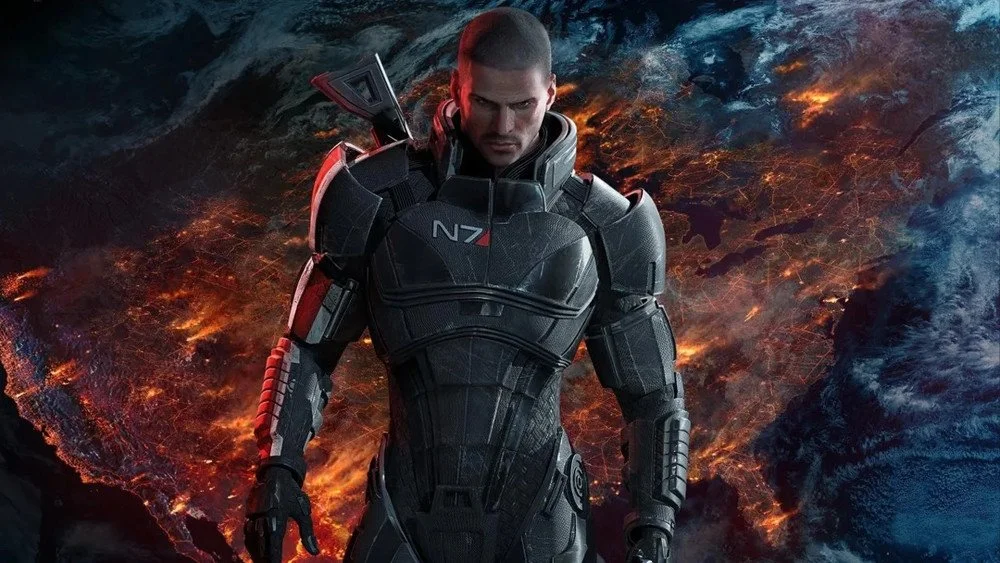
BioWare's recent history complicates the situation further. Mass Effect: Andromeda, Anthem, and Dragon Age: The Veilguard all struggled to replicate the critical or commercial achievements associated with the studio's earlier work, gradually weakening confidence in its ability to deliver another major success. These difficulties cannot be dismissed, and the closure should not be reduced to a single financial calculation. Nevertheless, the reported circumstances surrounding EA's decision reveal how corporate consolidation can magnify the consequences of previous failures. Acquisitions promise greater resources, operational stability, and opportunities for ambitious development, yet the financial obligations accompanying them can eventually produce the opposite effect. Studios become competing investments within an increasingly centralized portfolio, evaluated according to projected profitability, development costs, and strategic priorities. In this environment, creative identity and historical significance offer limited protection when management determines that another project presents a more attractive commercial opportunity. The possibility that BioWare was closed partly to make room for a Star Wars title that reportedly had not yet entered production makes the situation particularly striking.

The implications extend beyond BioWare itself. The gaming industry has spent years pursuing consolidation through increasingly expensive acquisitions, often presenting these transactions as opportunities to strengthen development capabilities and expand creative portfolios. However, the concentration of ownership also concentrates decision-making power, allowing a relatively small number of executives and investors to determine the futures of numerous studios and franchises. When financial obligations become sufficiently large, publishers may become less willing to tolerate experimental projects, uncertain development schedules, or games whose commercial prospects are difficult to forecast. The result risks becoming an industry increasingly dependent on recognizable intellectual properties and familiar business models, even as audiences continue to celebrate originality and mechanical innovation. EA has not publicly confirmed that Battlefront III was the deciding factor in BioWare's closure, and the reported project has yet to receive a formal announcement. Nevertheless, the broader circumstances are difficult to ignore. One of gaming's most celebrated RPG developers has disappeared, its flagship science-fiction franchise has been placed on indefinite hold, and hundreds of employees have lost their jobs. If the future of AAA gaming increasingly depends on choosing the safest investment among enormously expensive projects, BioWare's closure may become a particularly consequential example of what the industry stands to lose.
