
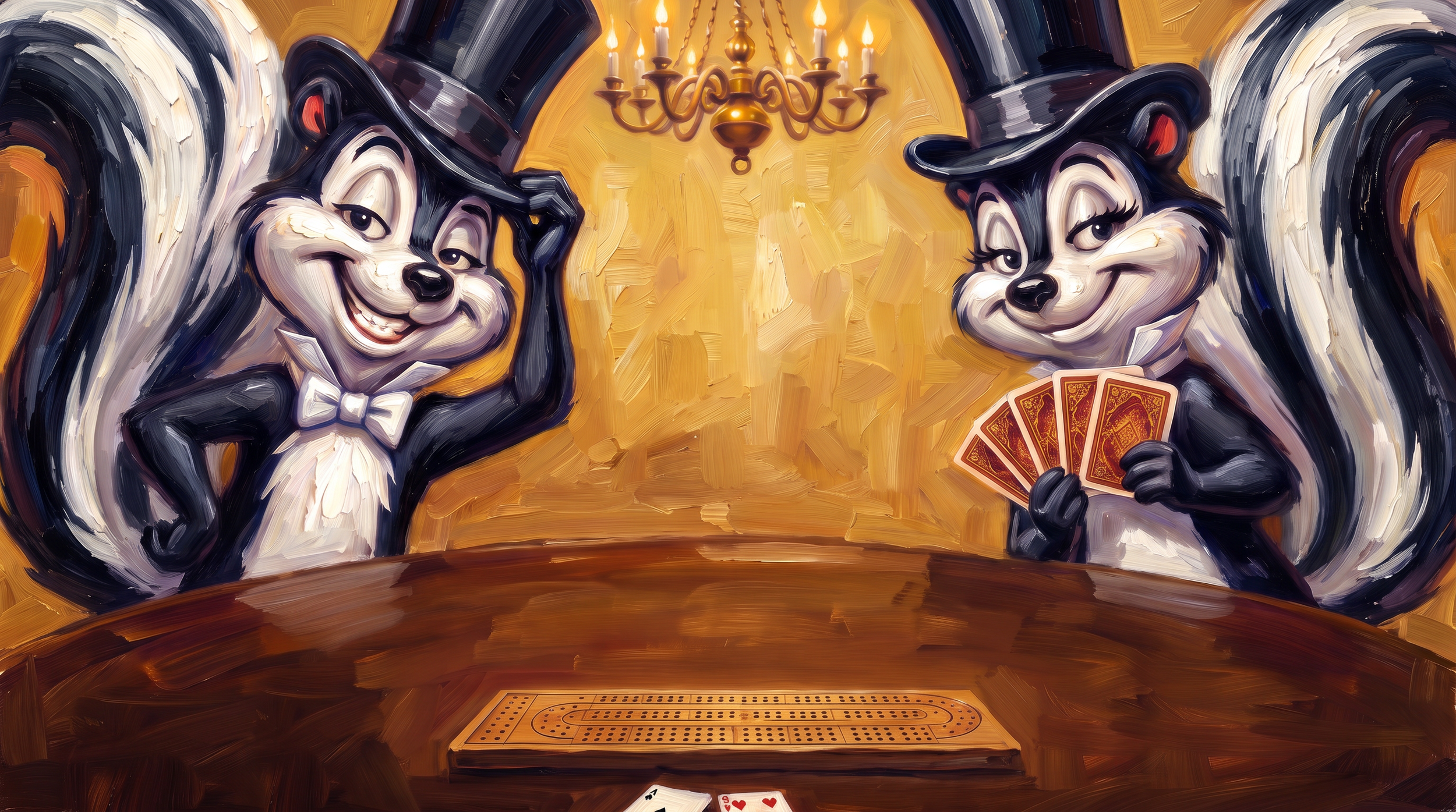
The intersection of traditional card games and modern roguelike design has produced some interesting experiments in recent years. Double Skunk, developed by David Kerr, takes one of the oldest established card games still widely played today, cribbage, and introduces a progression system built around power-ups, consumables, strategic builds, and unpredictable encounters. The result is an unexpectedly addictive experience that manages to preserve the fundamentals of cribbage while offering players new ways to approach its familiar rules.
Yet Double Skunk is interesting for reasons that extend beyond its gameplay. The project was developed extensively using generative artificial intelligence, something Kerr is remarkably forthcoming about. At a time when AI-generated content remains a contentious subject within the gaming industry, his willingness to discuss exactly how these tools contributed to development provides an opportunity to examine the relationship between creative intention, technological accessibility, and the increasingly blurred boundaries of game production.
A Familiar Game with New Possibilities
At its foundation, Double Skunk is still cribbage. Players familiar with the traditional card game will recognize its scoring rules, hand management, and pegging mechanics. Rather than attempting to reinvent these fundamentals, Kerr has deliberately preserved them, building an additional layer of roguelike systems around the established formula.
This decision was partly informed by conversations with the cribbage community, whose attachment to the traditional rules became apparent during development.
"Cribbage players love their rules, and from talking to people on r/Cribbage I found they weren't open to change, so I left the core alone," Kerr explains.
Instead, Double Skunk introduces power-ups, consumables, a shop, and board mechanics that expand the strategic possibilities available to players. Traditional cribbage largely revolves around deciding which cards to discard into the crib and how to sequence cards during pegging. Double Skunk complicates these decisions by introducing longer-term considerations about which upgrades to purchase, which combinations to pursue, and when to deploy limited resources.
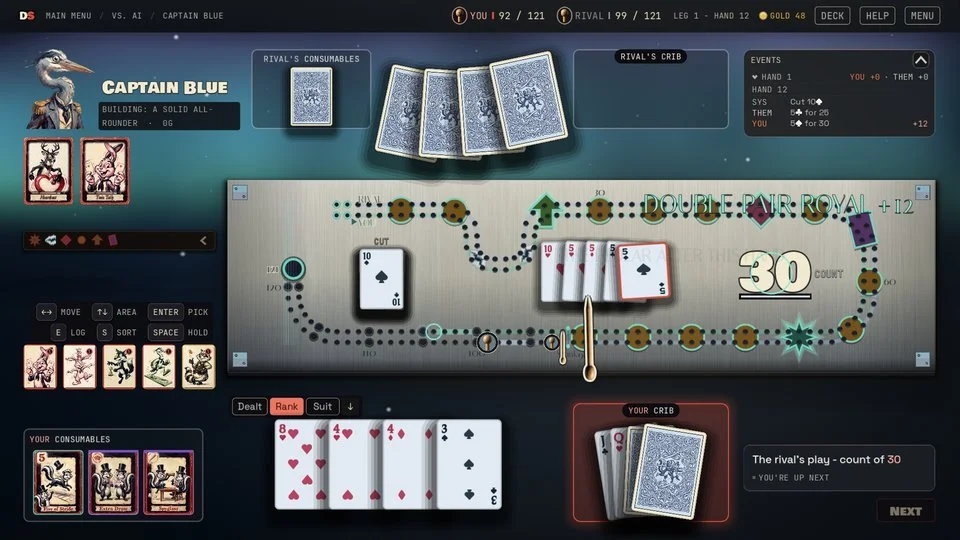
The result is a familiar card game with a considerably broader decision-making framework. A strong hand is no longer necessarily the most strategically advantageous option if an alternative better complements the player's existing build.
Kerr summarizes the intended dilemma: "What I hope happens is that you start asking whether to keep the stronger hand or the one that fits your build."
It is precisely this additional layer of decision-making that makes Double Skunk compelling. Each round contributes to a larger strategic picture, encouraging players to reconsider established habits and experiment with different approaches.
The Appeal and Limitations of the Formula
Double Skunk has an addictive quality that becomes apparent once its systems begin to interact. The combination of familiar card-game decisions and roguelike progression creates a satisfying rhythm of experimentation, adaptation, and incremental improvement. There is a persistent temptation to play another round, try a different combination of upgrades, or see whether an unfortunate hand can be turned into an unexpected victory.
Nevertheless, the experience is not without its rough edges. Some aspects could benefit from additional refinement, and the game's underlying reliance on cribbage inevitably limits its accessibility. Players who already enjoy cribbage are likely to appreciate the additional strategic possibilities, whereas newcomers may find themselves learning an unfamiliar card game before they can fully engage with its roguelike systems.
That presents an interesting design challenge. Double Skunk expands the possibilities of cribbage without fundamentally changing what makes cribbage itself appealing or frustrating. The random distribution of cards remains an important factor, and even thoughtful decisions cannot guarantee favorable outcomes.
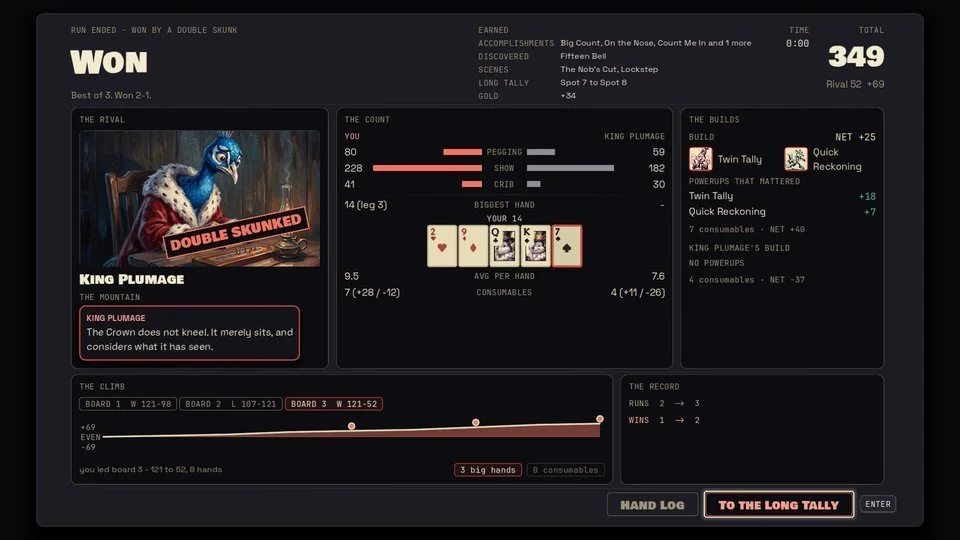
Kerr is conscious of this tension between luck and player agency. His solution has been to accommodate different interpretations of what makes a satisfying competitive experience. The campaign retains traditional randomized deals, allowing luck to influence the outcome. Weekly challenges, meanwhile, use duplicate rules, giving participants identical deals played from both sides and creating a more comparable test of decision-making. Versus mode offers further customization, allowing players to establish their preferred conditions.
This flexibility is particularly interesting from a procedural perspective. Rather than imposing a single definition of fairness or strategic mastery, Double Skunk allows different modes to emphasize different relationships between randomness and skill.
The AI Behind Double Skunk
Perhaps the most distinctive aspect of Double Skunk is the transparency surrounding its development.
Kerr makes no attempt to conceal the extent to which generative AI contributed to the project. According to him, AI tools were used to produce the code, character and card illustrations, animated sequences, music, sound effects, voice lines, portions of the written content, and initial translations. Importantly, he clarifies that the finished game does not run generative AI during gameplay.
His approach involves directing different AI agents through specialized tasks, reviewing their proposed plans, examining implementations, and repeatedly refining the resulting work. It is a development process that relies heavily on automated production while retaining human oversight of the game's direction.
"I don't want to deceive anybody, so I'll say it up front," Kerr explains.
This openness is particularly relevant given the controversy surrounding generative AI and its implications for creative industries. Kerr acknowledges those concerns, including their personal consequences.
"I get the backlash, and I've lost a job to AI myself," he says.
His perspective is that the value of a creative project ultimately depends on the care, attention, and intention invested in its development. He distinguishes between indiscriminate AI-generated content and projects whose creators use these tools to pursue a specific vision.
That argument will not satisfy everyone, particularly those concerned about the training practices, labor implications, and broader economics of generative AI. Nevertheless, Kerr's willingness to address the subject directly provides a more productive starting point for discussion than obscuring the tools involved.
The practical impact on development has been substantial. Kerr estimates that the project took approximately six months to create, compared with the six years he believes it might previously have required, assuming he could have acquired the necessary expertise.
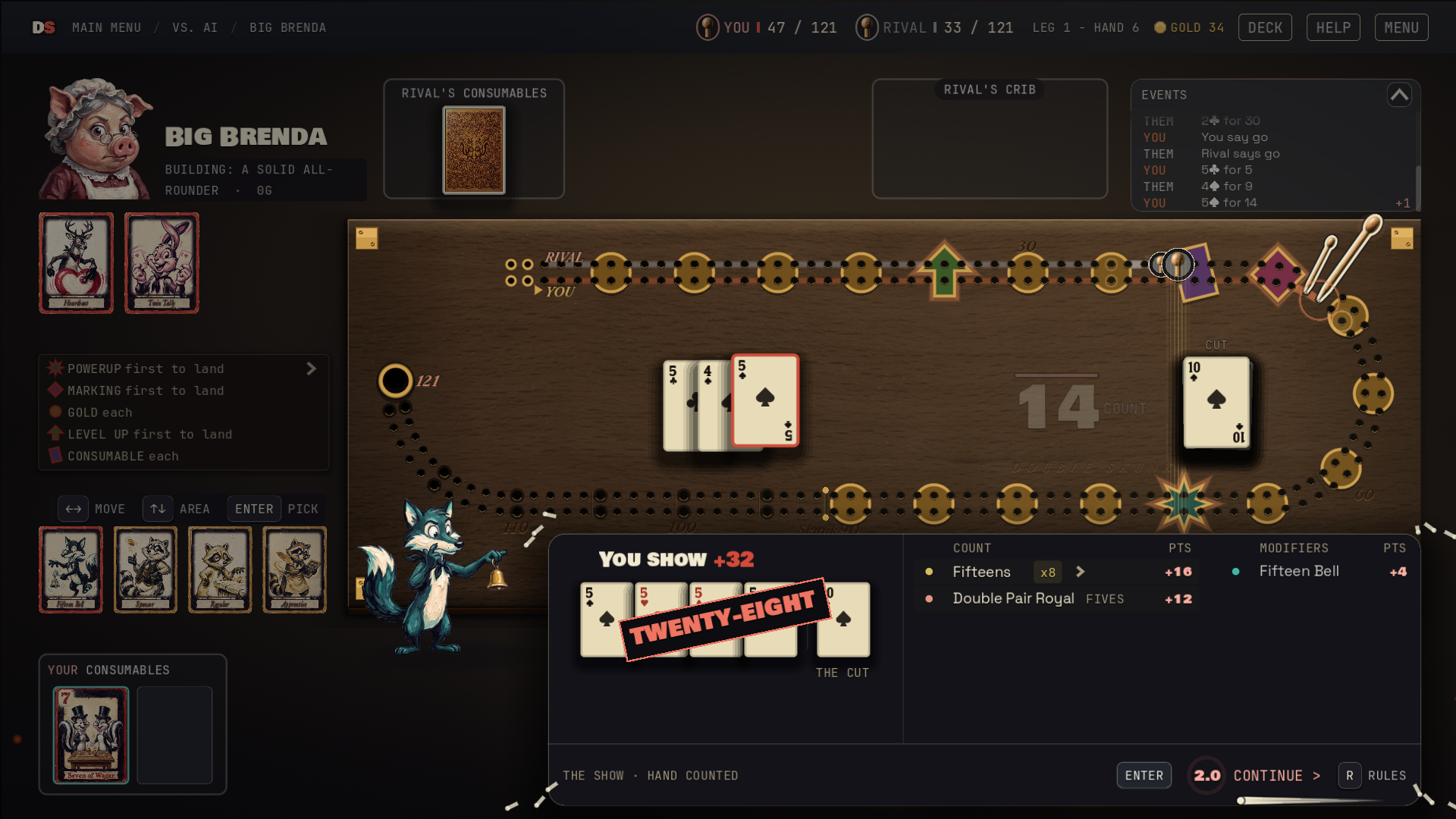
He also estimates that generating the game's art and animations cost approximately $400, including numerous discarded attempts. As his vision developed, he regenerated the entire cast of rival characters in a different style, and he continues to review each animation before release.
The resulting assets are not always perfect, something Kerr readily acknowledges. Players can disable animated scenes through a setting called Table Characters, although the static artwork remains. He has also expressed a willingness to revisit the game's visual presentation if it attracts a sufficiently large audience.
His motivation, however, was never primarily financial.
"Financial success was never the point. It was always about learning and building a game I would want to play with my kids along the way."
A Question of Creative Agency
For PROC3SS, Double Skunk presents an interesting opportunity to examine agency at two distinct levels: the decisions available to players within the game, and the decisions made by its developer throughout production.
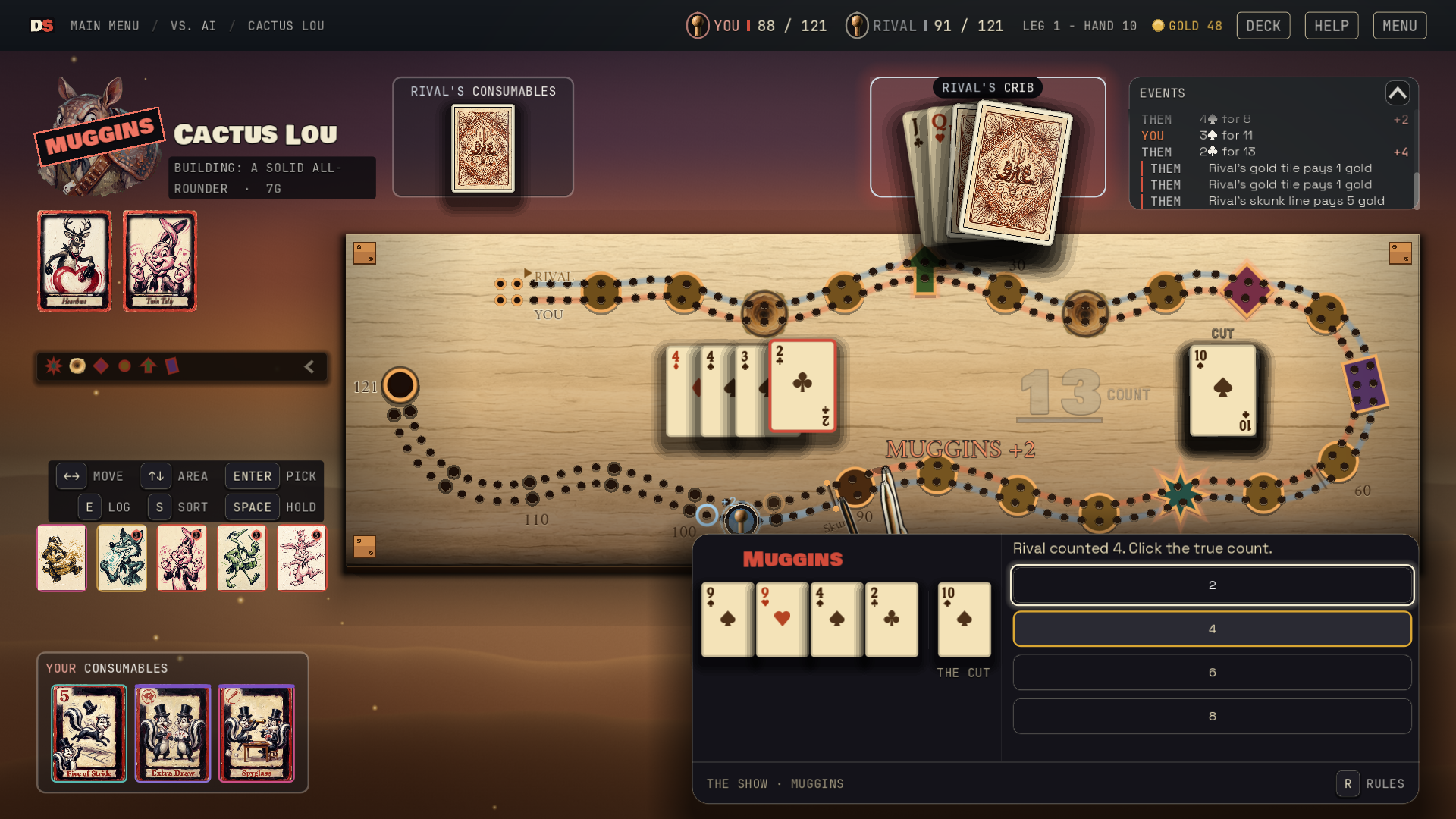
Within the game, agency emerges through the interaction between traditional cribbage rules and the additional roguelike systems. Players cannot determine which cards they receive, but they can influence how those cards interact with their upgrades, consumables, and longer-term strategies. The experience consequently becomes an ongoing negotiation between circumstances outside the player's control and the possibilities created by previous decisions.
The development process raises a parallel question. When generative AI produces much of a game's code and audiovisual content, how should we understand the role of the developer?
Kerr's account suggests a process centered on direction, selection, evaluation, and iteration. His creative contribution is expressed through the decisions that govern what is produced, which results are accepted, and how the different components are assembled into a coherent experience.
This does not resolve the ethical or artistic debates surrounding AI-generated content. It does, however, complicate the assumption that the use of generative AI necessarily eliminates meaningful creative involvement.
Double Skunk remains an expression of Kerr's particular interests: his childhood experiences playing cribbage with his grandfather, his desire to share the game with his children, and his fascination with extending its strategic possibilities.
Indeed, one of his ambitions is that players might learn traditional cribbage through Double Skunk and subsequently use that knowledge to connect with people outside the game.
That ambition gives the project a dimension that its unconventional production methods might otherwise overshadow.
Final Thoughts
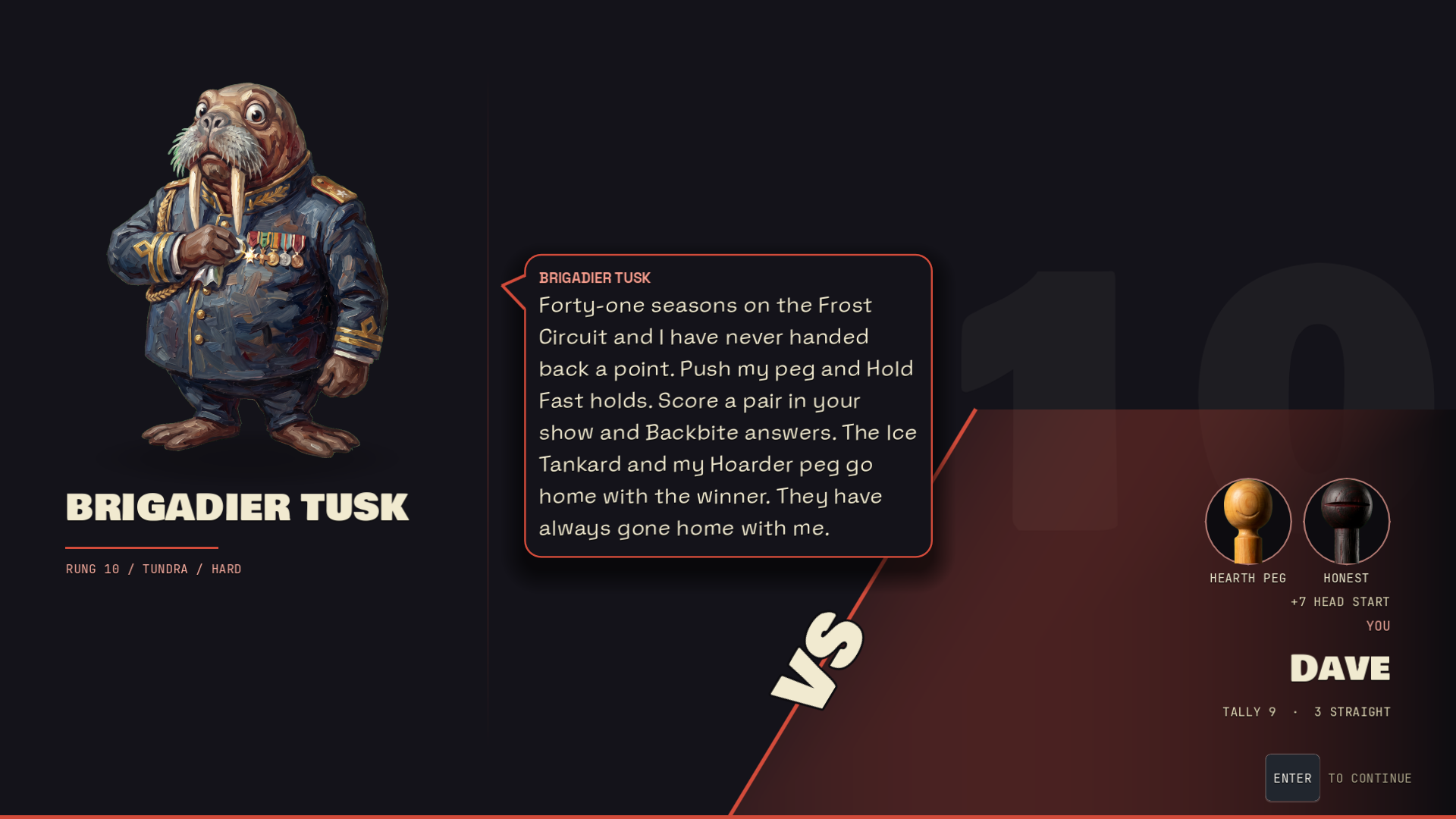
Double Skunk is an intriguing experiment in how established games can accommodate contemporary design ideas without abandoning their foundations. Its combination of cribbage and roguelike progression produces an engaging, frequently addictive gameplay loop, even if certain elements would benefit from further refinement.
Its appeal will naturally depend on the player's relationship with cribbage. Those uninterested in traditional card games may struggle to appreciate the underlying systems, while experienced players may find the additional strategic considerations a refreshing departure from familiar routines.
Beyond the gameplay, David Kerr's approach to development makes Double Skunk an especially relevant subject for an Indie Spotlight. His openness about generative AI invites scrutiny, discussion, and a more nuanced consideration of what creative authorship means when increasingly sophisticated tools participate in production.
Whether one agrees with his methods or not, Double Skunk offers something worth examining: a deeply personal project made possible through technologies that are simultaneously expanding creative accessibility and challenging established ideas about creative labor.
And beneath that discussion lies a surprisingly compelling little card game.
Disclosure: This Indie Spotlight is an unscored editorial feature. Developer statements were obtained through a written interview with David Kerr. PROC3SS maintains editorial independence over its coverage.
