
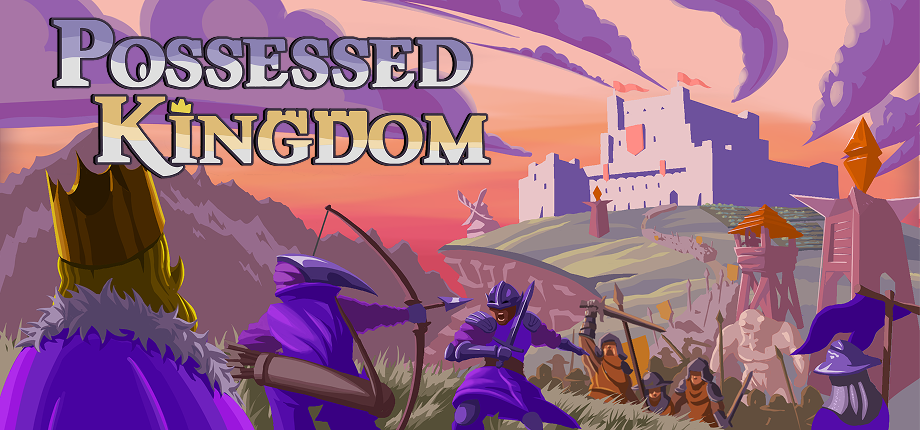
There's something strangely nostalgic about Possessed Kingdom. Within minutes of launching the game, I was reminded of the browser-based strategy games that populated websites like Y8 during the Flash era. Its interface, presentation, and general aesthetic evoke a simpler period of gaming, when relatively modest visuals often concealed surprisingly ambitious gameplay. Yet beneath that familiar exterior lies a considerably more sophisticated experience, combining elements of real-time strategy, deckbuilding, roguelike progression, and turn-based combat.
Developed by Josep Pi and his team, Possessed Kingdom attempts something rather unusual: preserving the strategic depth of games like StarCraft II and Age of Empires while removing the mechanical demands that have traditionally accompanied the genre. Instead of managing armies, economies, and production simultaneously, players are given the opportunity to plan their decisions before watching the consequences unfold. After spending approximately two uninterrupted hours with the game, I found myself increasingly invested in its systems. What initially appeared to be a relatively modest indie strategy game gradually revealed a compelling gameplay loop, one that brought back memories of playing Age of Empires II as a child.
That feeling alone made Possessed Kingdom worth examining.
Reimagining the RTS Formula
The real-time strategy genre has always presented an interesting contradiction. Games like StarCraft and Age of Empires offer remarkable strategic freedom, yet their competitive environments frequently reward mechanical execution as heavily as strategic understanding. Players must manage economies, produce units, coordinate attacks, and respond to threats, often within seconds of one another. Actions per minute, commonly abbreviated as APM, consequently become an important measure of proficiency.
For Josep, this mechanical barrier was a central motivation behind Possessed Kingdom. "Those games offer strategic depth that I think many players never get to experience because the barrier to entry is so high," he explains. His solution was to separate strategic decision-making from real-time execution. Players construct their economies, establish production, deploy defenses, and prepare attacks through a turn-based system. Cards represent buildings and other strategic options, allowing the game to communicate familiar concepts through an interface associated with deckbuilders.
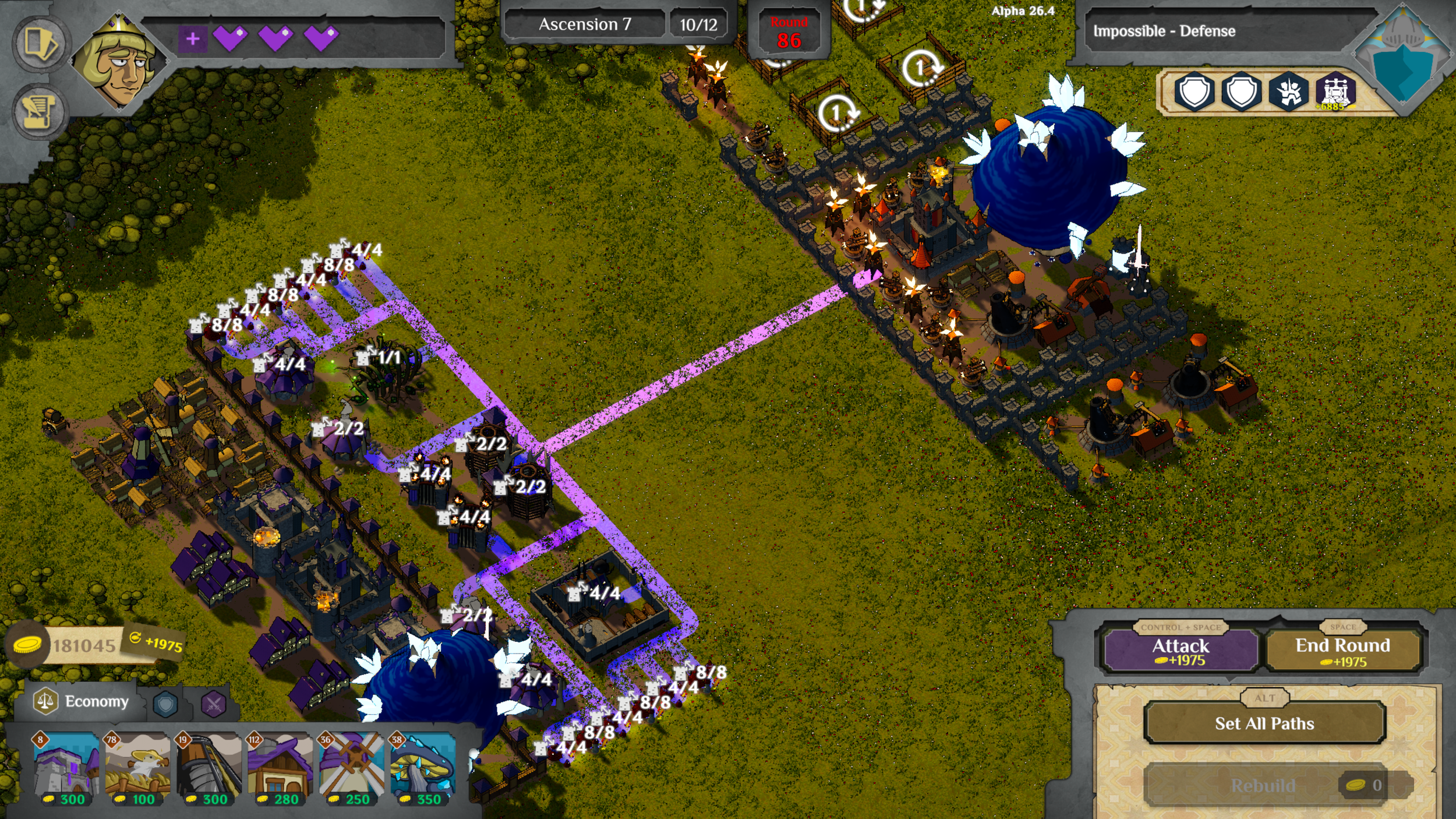
According to Josep, the team experimented with several approaches before settling on cards. Their familiarity, randomness, and capacity to represent different choices made them an effective way to introduce strategic complexity without overwhelming players with conventional RTS controls. The result is an interesting hybrid. Although Possessed Kingdom draws heavily from real-time strategy, its turn-based structure removes the defining characteristic of the genre: real time itself.
During my playthrough, it felt remarkably similar to playing a turn-based version of Age of Empires. The familiar considerations were still present. Should I prioritize economic development? Invest in defenses? Produce additional troops? Or commit resources to an early attack before my opponent has an opportunity to establish themselves? The difference was that I could consider these questions without simultaneously worrying about how quickly I could execute my decisions.
Strategy Without Mechanical Pressure
One of Possessed Kingdom's more distinctive mechanics is its approach to troop movement. Rather than commanding units during combat, players draw paths that determine how their armies will approach the battlefield. Once preparations are complete, combat resolves automatically. The intention is to preserve decisions about positioning, timing, and attack routes while removing the need for constant micromanagement.
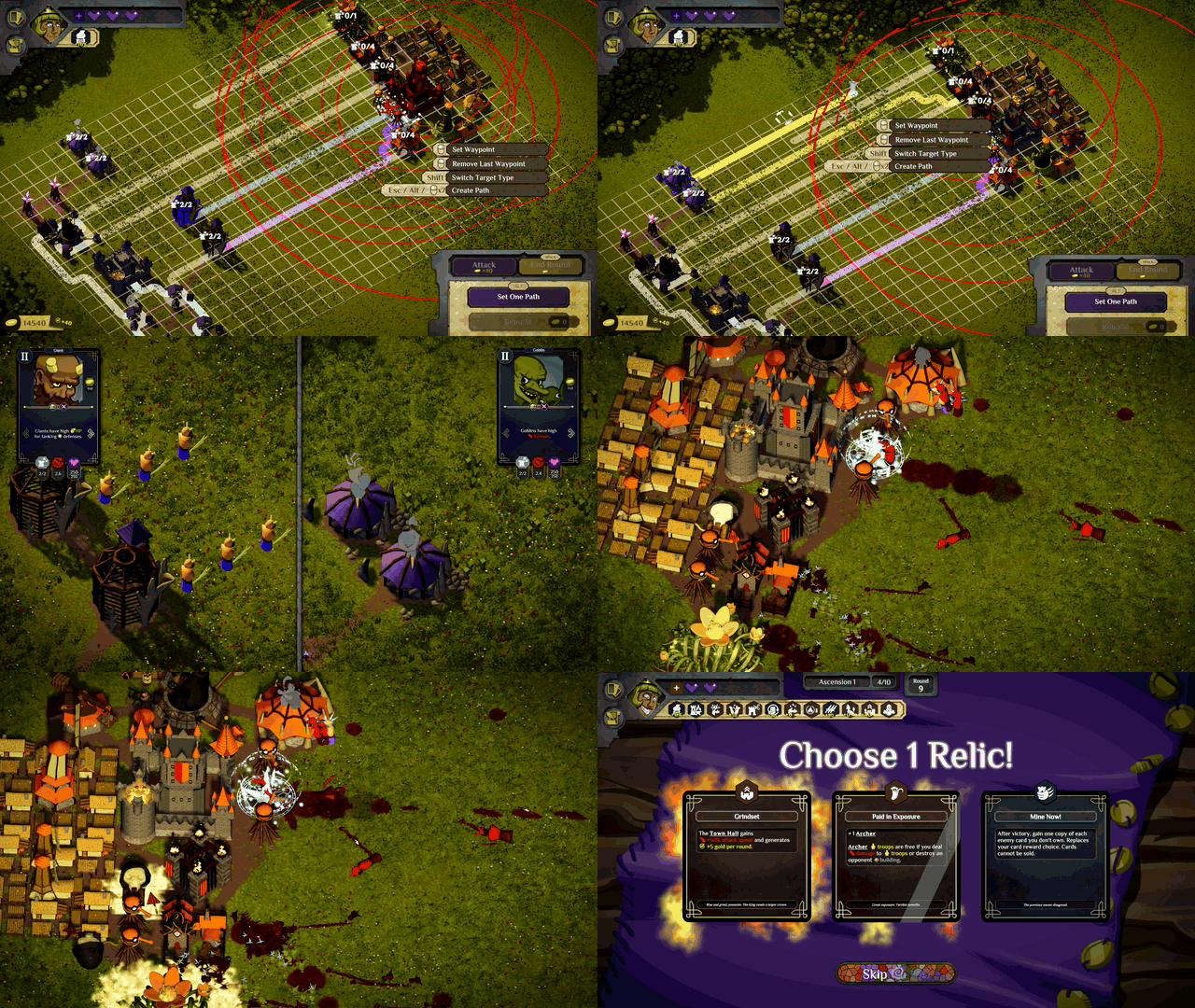
"Drawing troop paths before combat was my way of separating those strategic decisions from the need to execute everything simultaneously," Josep explains. Interestingly, this particular mechanic was less central to my experience than the developer's description might suggest. Although path drawing contributes to the game's tactical possibilities, I found myself considerably more engaged with its broader economic and strategic systems. Managing production, deciding which buildings to construct, and determining when to transition from development to aggression occupied much more of my attention.
In that respect, Possessed Kingdom succeeds in a slightly different way than I initially expected. Its greatest strength, at least during my first two hours, was the satisfaction of managing an evolving strategic position without the mechanical pressure associated with conventional RTS games. From the perspective of procedural rhetoric, this distinction is particularly interesting. By removing real-time execution, the game changes what it means to be a capable strategist. Success becomes less dependent on the speed with which players can translate intentions into actions, allowing preparation and resource allocation to occupy a more prominent position. It is an approach that makes the genre considerably more approachable without eliminating the fundamental pleasure of strategic decision-making.
Economy, Aggression, and the Illusion of Safety
Possessed Kingdom offers several approaches to its encounters, and I spent much of my playtime experimenting with different strategies. Early aggression and unit spam proved particularly effective, often allowing me to overwhelm opponents before their economies or defenses had properly developed. I also experimented with defensive approaches reminiscent of tower defense games, alongside more economically focused strategies intended to produce stronger armies later in an encounter. The variety was encouraging. Different approaches were possible, and the game's combination of cards, buildings, and unit production provided enough flexibility to make experimentation worthwhile.
However, there was an important caveat: early aggression frequently appeared to be the most reliable solution. That observation does not necessarily establish a broader balancing problem. Two hours is insufficient to determine the full strategic depth of a game built around multiple playstyles and escalating challenges. Nevertheless, it was difficult to ignore how consistently aggressive openings could rescue an encounter or secure a victory.
This is particularly relevant because Josep describes the game's strategic foundation as a rock-paper-scissors relationship between aggression, defense, and economy. "Against a defensive enemy, you can invest heavily in economy and use that advantage to overpower them later. Against an economic enemy, an early attack can punish their greed," he explains. The intention is to create meaningful opportunity costs, ensuring that every strategic investment sacrifices something elsewhere. Players can inspect an opponent's planned layout and available cards before making their own decisions, theoretically allowing them to develop counterstrategies based on the information provided.
That philosophy is promising, and its influence is evident throughout the game. My experience simply suggests that the practical relationship between these strategies deserves continued attention as development progresses. Josep himself acknowledges that balancing has been an evolving process. The team initially responded to powerful combinations by weakening them, before recognizing that discovering unusually effective strategies was part of the appeal.
One example involved a Goblin Hut rush supported by early economic development. Rather than eliminating the strategy, the developers increased the building's construction time, preserving its effectiveness while creating additional opportunities for counterplay. Another involved opening with two Town Halls, sacrificing access to higher-tier technology in exchange for a stronger early position. These examples demonstrate an understanding of what makes strategy games compelling. Powerful decisions should carry meaningful consequences, and a strong strategy is most interesting when opponents have opportunities to recognize and respond to it.
Learning Through Failure
Possessed Kingdom initially felt surprisingly open-ended, even with its relatively detailed tutorial. I understood the basic mechanics, but understanding how those mechanics should interact was another matter. It took approximately twenty minutes before the experience truly began to click. Once I started recognizing the relationship between economic investment, production, and combat, the gameplay loop became considerably more engaging.
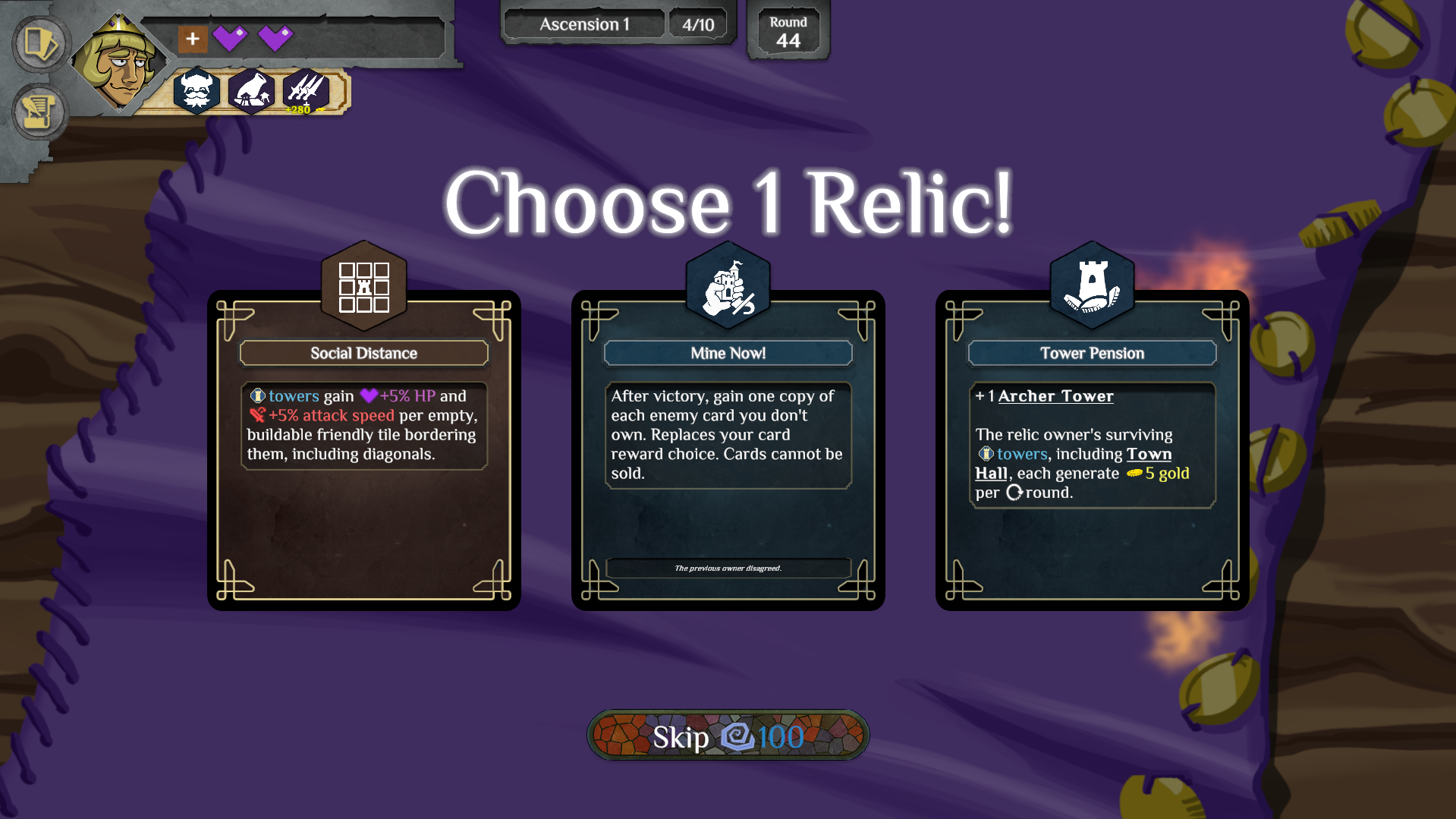
The roguelike structure supports this learning process by gradually introducing more complex encounters and opportunities for experimentation. Josep's intention is to accommodate players with different levels of strategic experience. Veterans of competitive RTS games should be able to progress quickly through familiar challenges, while newcomers are given room to understand the systems through repeated attempts.
"My hope is that losing gives you something concrete to reconsider on the next attempt: your choices, your preparation or how you approached the opponent," he explains. This emphasis on understandable consequences is important. Strategy games become frustrating when players cannot identify why a particular decision succeeded or failed. Possessed Kingdom attempts to address that problem by revealing much of the information necessary to plan an encounter, including the opponent's intended layout and available options. The result can occasionally resemble a puzzle, with players encouraged to identify an effective response to the conditions presented.
During my playthrough, I managed to overcome the Ascension levels I encountered, and the progression provided enough momentum to keep me playing. However, I would hesitate to make definitive claims about the game's long-term difficulty or replayability based on that experience alone. What I can say is that the process of experimenting with different approaches remained enjoyable, even when I began gravitating toward aggressive strategies.
Presentation and the Rough Edges
If Possessed Kingdom's gameplay demonstrates considerable promise, its presentation remains an area where further development could make a meaningful difference. The individual card illustrations and 3D models are appealing, and there is a clear effort to give the game's units and buildings their own identities. Unfortunately, the surrounding interface feels comparatively dated. Menus and general UI presentation evoke the Flash-era games mentioned earlier, which contributes to the nostalgic atmosphere but also makes the overall package feel less polished than its underlying mechanics deserve.
Josep is candid about these limitations. "By far, the hardest part for us has been the graphics," he admits, explaining that the team has struggled to communicate the game's appeal visually, particularly when marketing it to potential players. The audio presents similar difficulties. During my playthrough, the sounds became repetitive, and the overall sound design felt underdeveloped compared with the complexity of the gameplay systems. Greater variety and refinement could help make repeated encounters more satisfying.
Path drawing also occasionally became frustrating. The grid-based movement system can feel restrictive, particularly when attempting to establish routes that seem straightforward in principle but prove awkward to execute through the available interface. These issues rarely prevented me from enjoying the game, although they did create moments of friction in an otherwise engaging experience. More importantly, they are areas where relatively focused improvements could make a substantial difference. Possessed Kingdom already has a compelling mechanical foundation. Improving the interface, audiovisual feedback, and usability of troop pathing would help that foundation become more immediately apparent to new players.
The Pleasure of Playing at Your Own Pace
Perhaps the most interesting thing about Possessed Kingdom is how effectively it captures the strategic appeal of traditional RTS games while fundamentally changing the player's relationship with time. In a conventional RTS, time is a resource that must constantly be managed. Every second spent considering an action is a second during which an opponent may be expanding, producing units, or preparing an attack. Strategic thought and mechanical execution are consequently inseparable.
Possessed Kingdom removes much of that pressure. Players can evaluate their options, consider an opponent's position, and commit to decisions without needing to maintain a competitive rhythm of inputs. This changes the experience considerably. A player who understands economic development and military timing can engage with those concepts without first mastering complex control schemes or high-speed multitasking. There is something refreshing about that approach, particularly in a genre whose competitive culture can sometimes make strategic games feel intimidating.
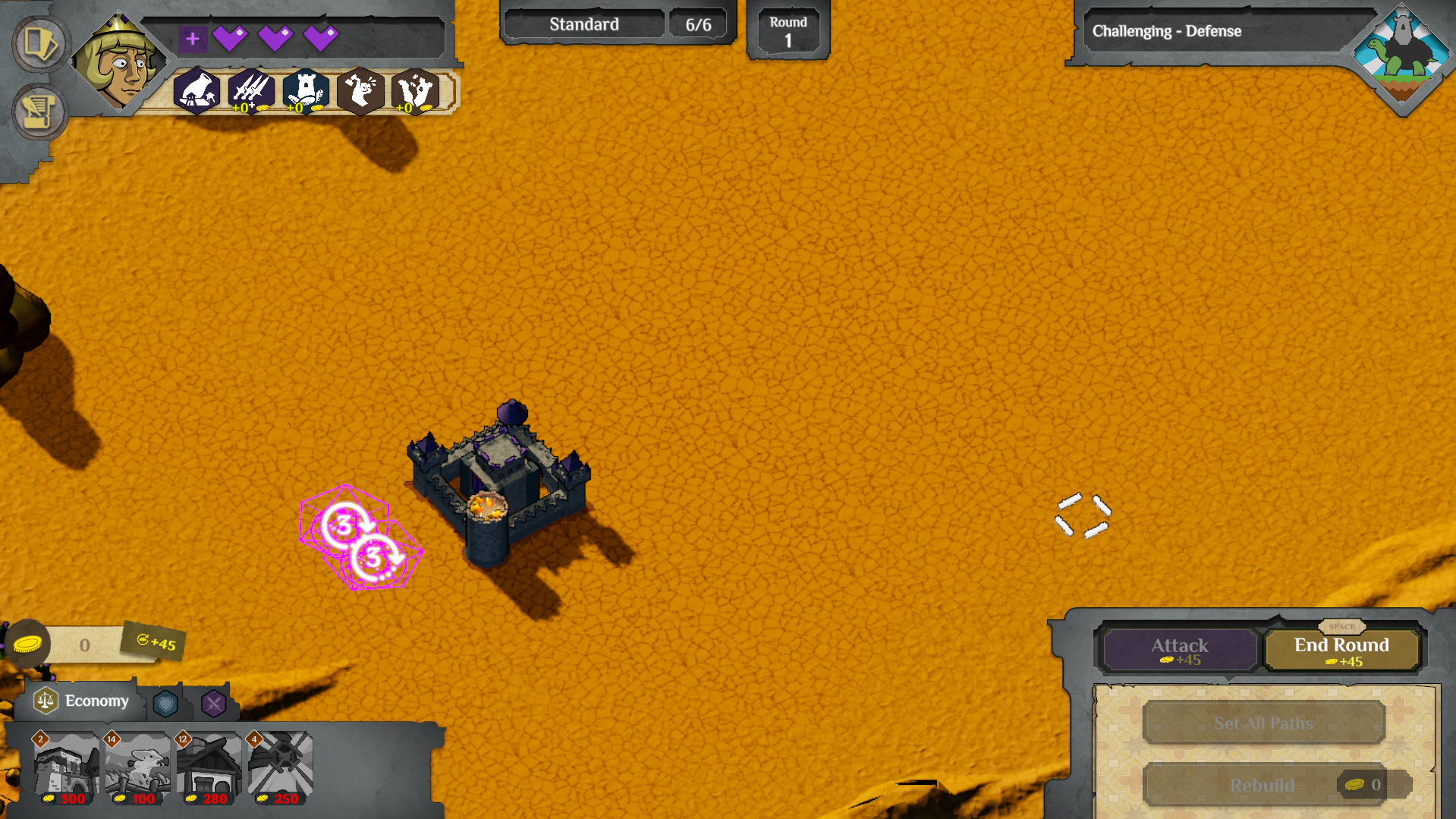
For me, the experience brought back memories of playing Age of Empires II as a child, experimenting with buildings and armies simply because I enjoyed discovering what they could do. I was less concerned with optimal execution than with the possibilities offered by the game's systems. Possessed Kingdom recaptures a portion of that feeling, and while nostalgia alone cannot carry a game, it can reveal something important about the experience a developer has managed to create.
Final Thoughts
Possessed Kingdom is an ambitious indie strategy game whose mechanical ideas deserve more attention than its modest presentation might initially suggest. Its combination of turn-based decision-making, deckbuilding, roguelike progression, and RTS-inspired economic management creates a surprisingly addictive experience. The ability to experiment with different approaches without the mechanical demands of traditional real-time strategy is particularly appealing, and the game's systems provide a strong foundation for further development.
There are shortcomings. The interface could benefit from modernization, the audio becomes repetitive, and the grid-based troop pathing occasionally feels cumbersome. My early success with aggressive strategies also raises questions about how consistently the game's intended strategic counterplay emerges in practice. Nevertheless, I spent two hours playing Possessed Kingdom without taking a break, and I fully intend to return to it after finishing this article. That is perhaps the clearest indication of its appeal.
For newcomers interested in RTS games, or players who enjoy strategic decision-making without the pressure of high actions per minute, Possessed Kingdom offers an accessible and entertaining alternative. It preserves much of the pleasure of managing economies, producing armies, and outmaneuvering opponents while allowing players to approach those decisions at their own pace.
Sometimes, the most effective way to revisit a genre is to reconsider which of its conventions are truly essential. Possessed Kingdom makes a compelling case for doing exactly that.
Editor's note: This Indie Spotlight is based on approximately two hours of firsthand gameplay and a written Q&A with developer Josep Pi. It is an unscored editorial feature reflecting the experience of the game during the period covered.
