

Exclusive Developer Interview | PROC3SS
What happens when a colony-building game abandons the threat of failure and instead asks players to care for the world they create? That question lies at the heart of Luminids, an upcoming cozy colony-building adventure developed by Nick Jacob, founder and game director of Luminids Studios. Drawing upon his background in software engineering and his interest in artificial intelligence, Jacob is developing a simulation in which autonomous creatures form relationships, develop individual personalities, and gradually build a community alongside the player. The project combines settlement construction, exploration, and resource management with an unusual emphasis on emotional attachment and cooperation, allowing players to experience their creations from both an overhead perspective and in first person. We spoke with Jacob about the philosophy behind Luminids, the challenges of designing autonomous characters, and how the game's systems encourage players to approach colony management differently.
1. Design Philosophy: Building a Game Without Failure
PROC3SS: Luminids deliberately removes combat, death, and conventional failure states from the colony-building formula. These mechanics traditionally provide much of the tension and motivation in the genre. What made you decide to abandon them, and how do you intend to maintain meaningful player engagement without the possibility of failure?
Nick Jacob: I think we've become accustomed to the idea that games need to punish players to keep them engaged. Whether that's losing progress, losing characters, managing constant threats or simply being told we've failed. I wanted to challenge that assumption.
When I started Luminids, I had a fairly simple ambition: I wanted to build a game that helps people feel still again. Somewhere you could escape the pressures of everyday life without immediately being handed another collection of responsibilities and consequences.
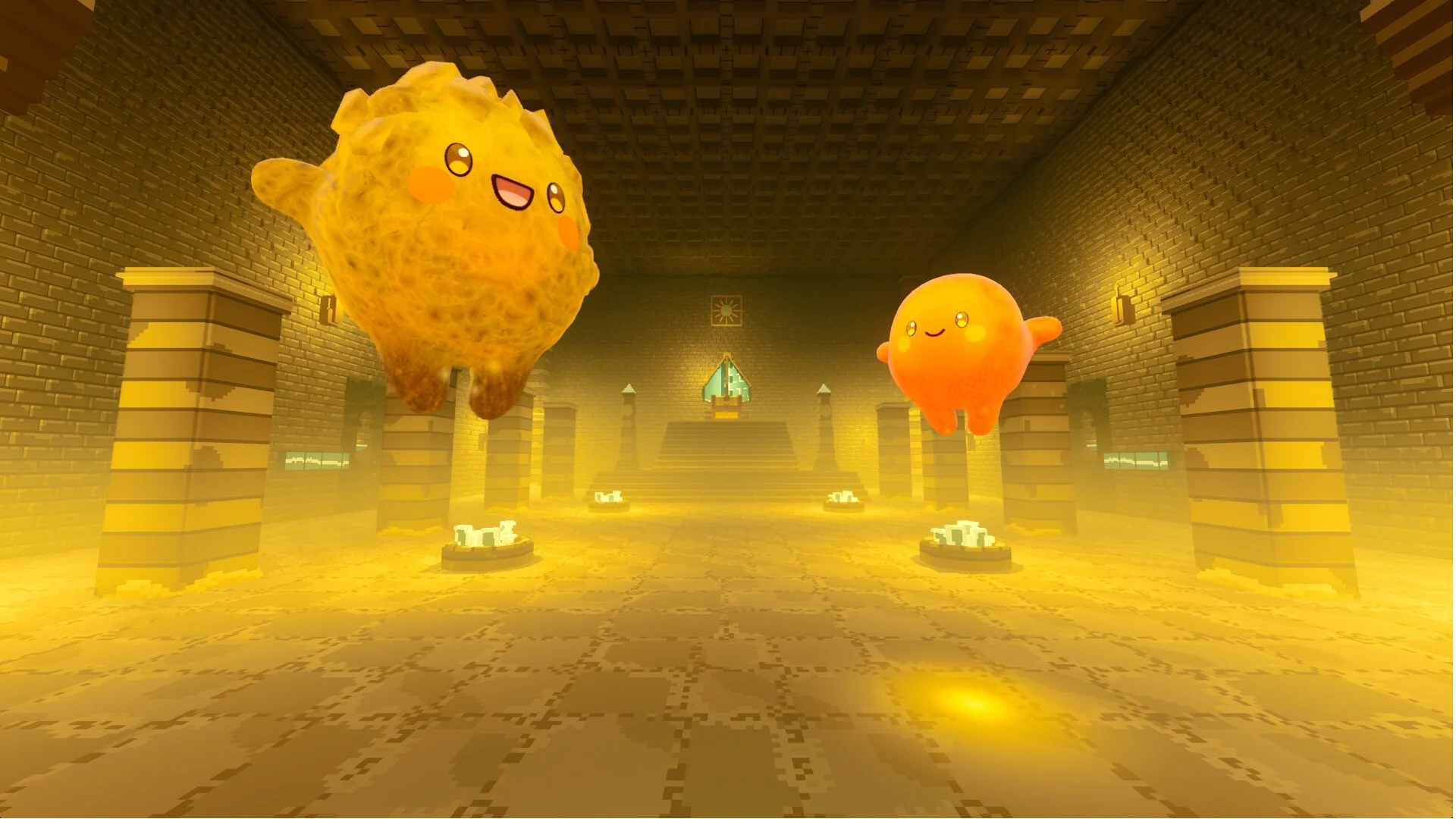
But removing failure doesn't mean removing purpose. In Luminids, motivation comes from curiosity, creativity, attachment and discovery. You're building a home for creatures that gradually develop their own identities. You're exploring a vast island, uncovering its history, discovering sanctuaries and rebuilding something meaningful together.
There are still needs to satisfy and problems to solve. A hungry Luminid might become tired, lose its enthusiasm and come looking for your help. But it isn't going to die because you forgot to feed it.
I want players to care because they've formed an attachment, not because they're frightened of losing something.
Ultimately, I don't believe meaningful engagement has to come from fear of failure. Sometimes the desire to nurture something, watch it grow and see what happens next is an equally powerful motivation.
2. Procedural Rhetoric: Encouraging Care Through Gameplay
PROC3SS: One of the ideas we explore at PROC3SS is procedural rhetoric, the way a game's rules and systems communicate ideas through player interaction. Luminids appears to encourage care, cooperation, and coexistence rather than efficiency or survival at any cost. Was this an intentional design philosophy, and what do you hope players will take away from interacting with these systems?
Nick Jacob: Absolutely intentional, and probably one of the most important aspects of Luminids.
Many games, particularly simulation and strategy games, teach us to think in terms of efficiency. How quickly can we extract resources? How productive is this worker? How do we maximise output?
There's nothing inherently wrong with that. I enjoy those games myself.
But I became fascinated with the idea of building a simulation where the inhabitants aren't simply resources to be optimised.
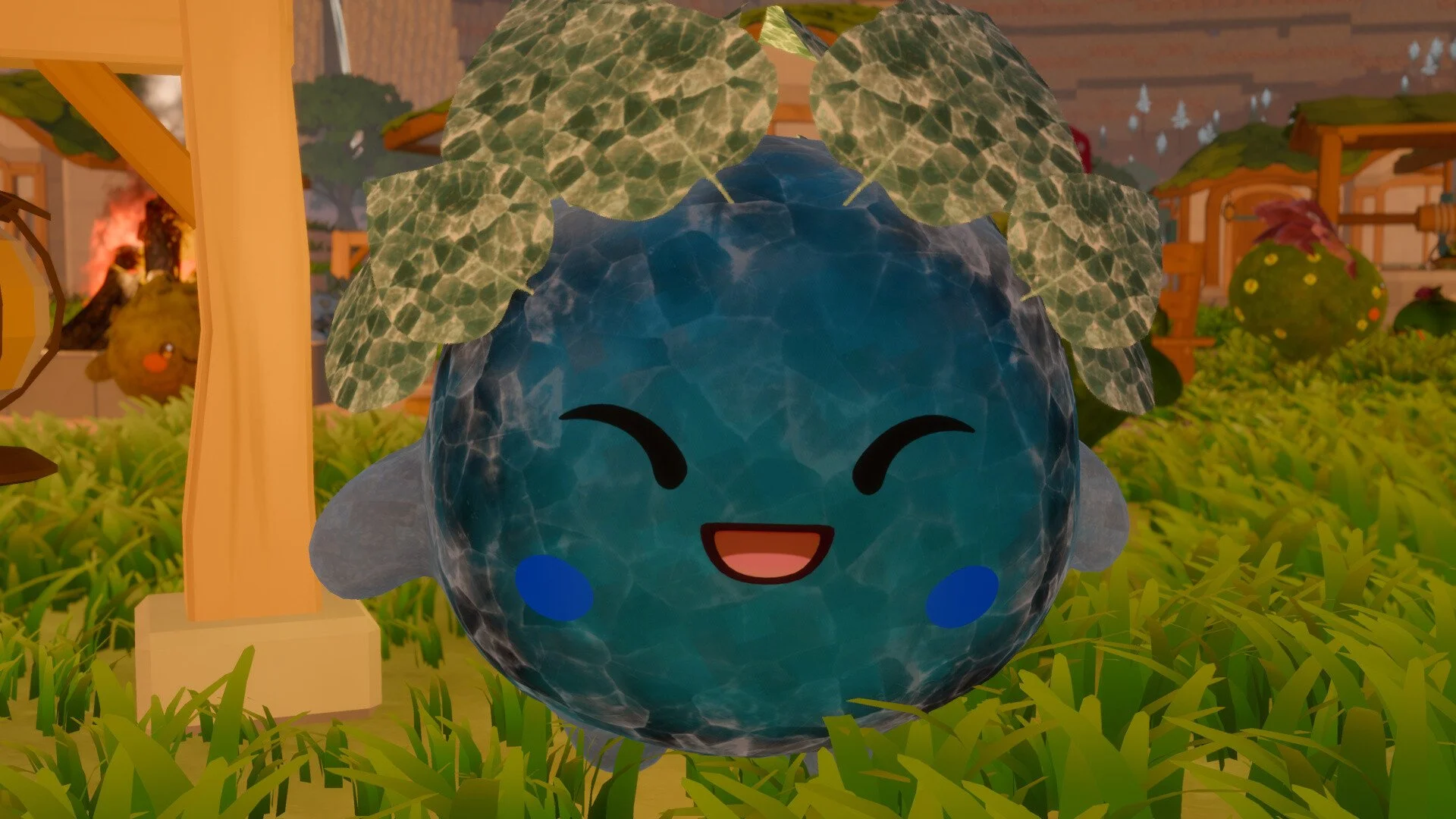
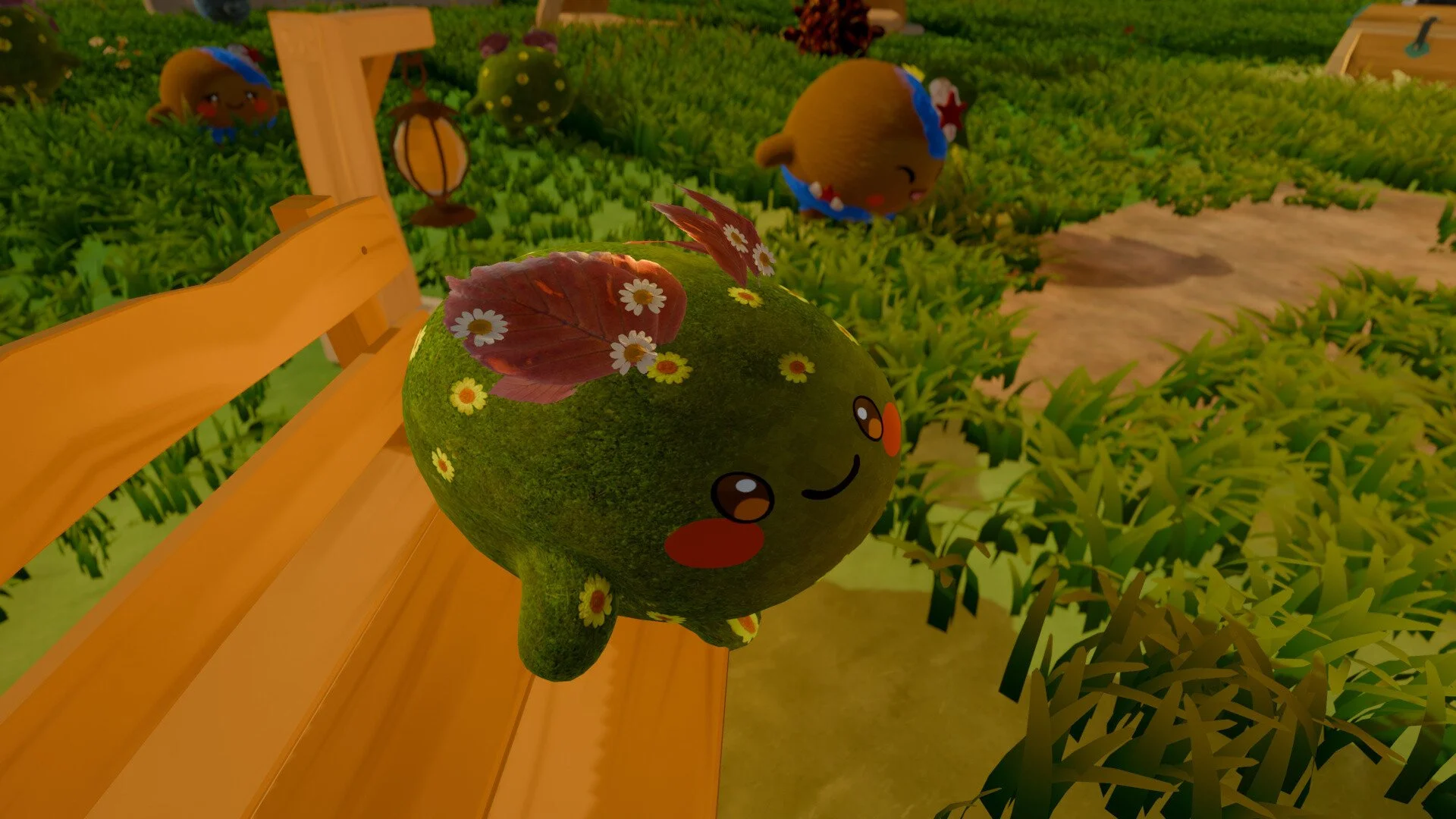
In Luminids, the creatures have needs, preferences, relationships and individual experiences. The player creates an environment in which they can flourish, rather than treating them as components of a production machine.
And importantly, I'm trying to communicate those ideas through gameplay rather than telling players how they should feel.
A creature that develops a friendship, remembers being helped or gradually becomes more comfortable around you communicates something through its behaviour.
My hope is that players begin to see their colony less as something they own and more as a little community they belong to.
I don't necessarily want players to walk away having learned a moral lesson. I'd much rather they walk away feeling that they've cared about something.
If someone finishes playing and finds themselves thinking about a particular little Luminid they became attached to, I think we've achieved something special.
3. Player Agency: The Keeper Rather Than the Commander
PROC3SS: Most colony simulators place players in a position of authority, allowing them to directly control workers, assign tasks, and optimize production. In Luminids, players shape the environment while the creatures retain a degree of autonomy. How did you approach balancing player agency with the independence of the Luminids, particularly when their behavior might conflict with what the player wants to accomplish?
Nick Jacob: This has been a fascinating design challenge because traditional colony simulators give players enormous authority.
You select a character, tell them where to go, what to build, when to work and what resources to collect.
I wanted to explore a different relationship.
In Luminids, you're not really their commander. You're their Keeper.
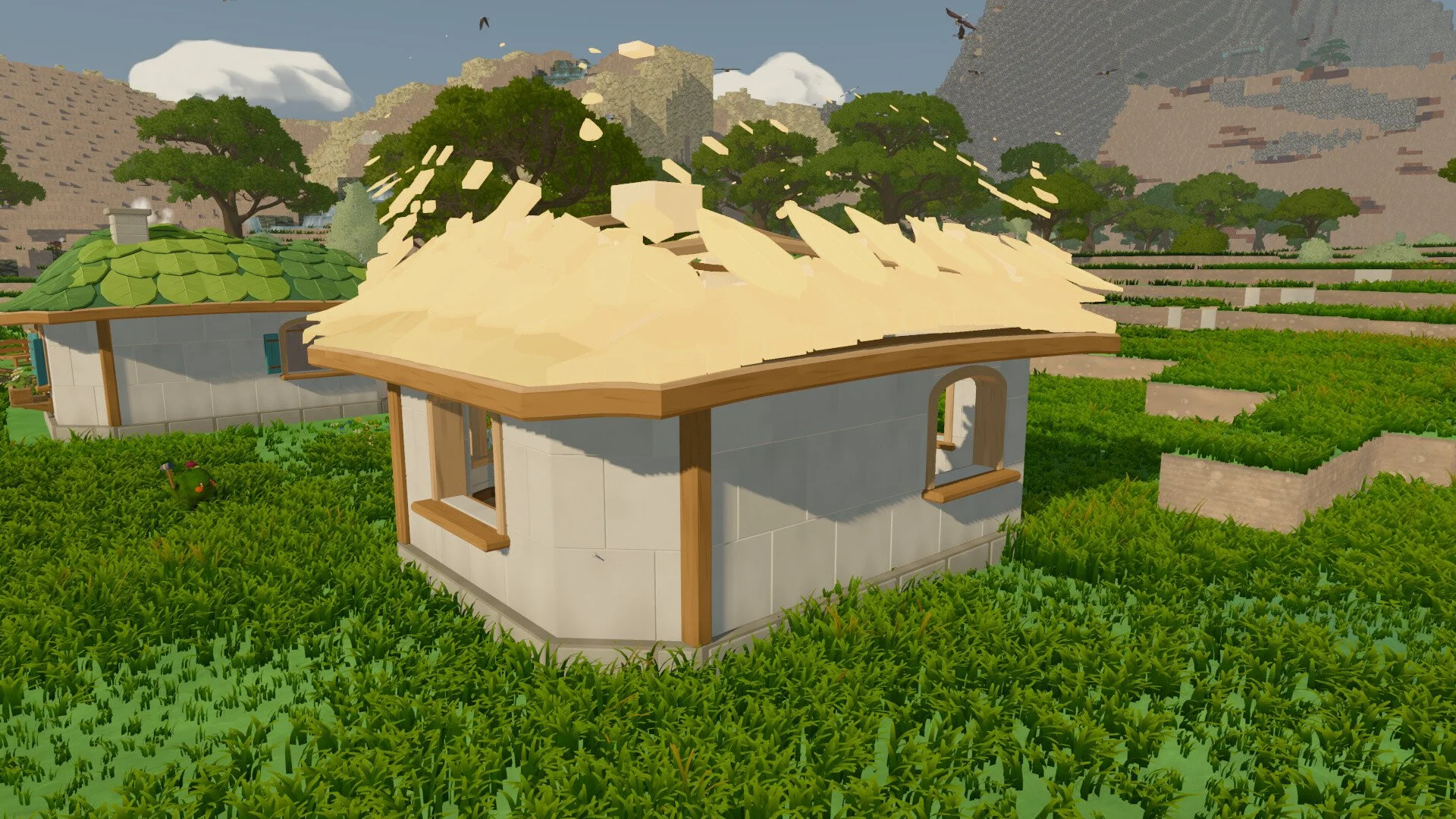
You shape the landscape, establish settlements, create opportunities and provide the resources that allow your colony to develop.
But the Luminids themselves have their own internal systems governing needs, work, relationships, preferences and behaviour.
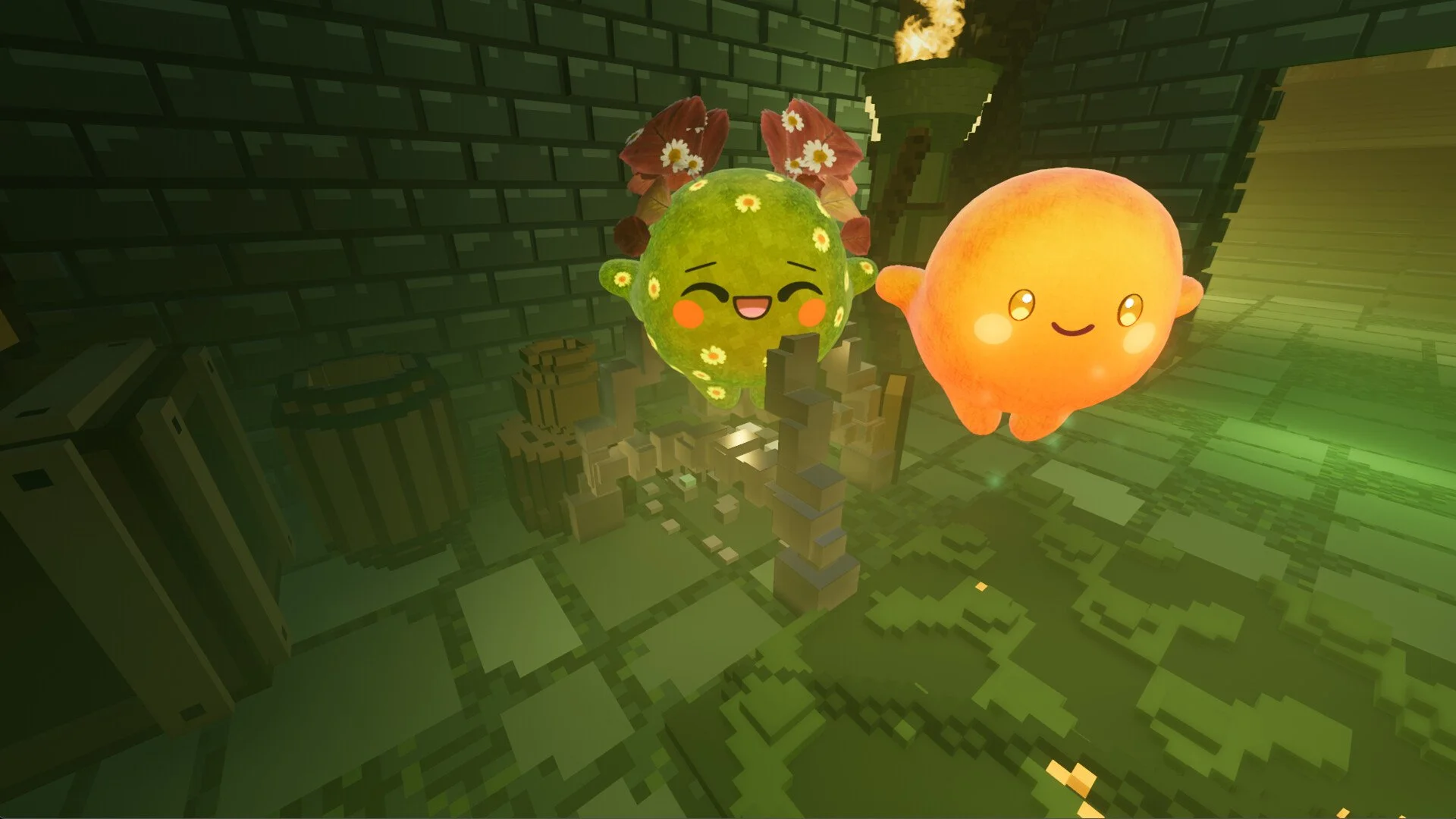
One might become particularly interested in exploring. Another might prefer spending time near water. Others develop different routines or become more focused on particular activities through experience.
The interesting part is that the player can influence these things without necessarily controlling them directly.
Of course, there's a delicate balance here. Autonomy shouldn't become frustration. If the player wants to build a house, the colony needs to be capable of organising itself to accomplish that.
So the challenge is creating believable independence within a cooperative framework.
I want the player to feel influential without feeling omnipotent.
And perhaps more importantly, I want the creatures to feel like they're participating in building their world, rather than simply executing instructions.
4. Emergent Narratives: Creating the Conditions for Stories
PROC3SS: You've described how individual Luminids develop quirks, relationships, and memories through their experiences rather than receiving predetermined personalities. How much of their behavior is genuinely emergent, and have you encountered any unexpected interactions during development that produced stories or situations you hadn't explicitly designed?
Nick Jacob: This is probably the area I'm most passionate about, particularly given my background in software engineering and my wider interest in artificial intelligence.
I've always been fascinated by the distinction between something that appears intelligent because it's following a script and something whose behaviour emerges from its experiences and internal state.
With Luminids, I've been exploring how relatively simple individual systems can combine to create something that feels much more complex.
Each creature has systems governing its needs, moods, activities, relationships and experiences. Quirks develop through what the creature actually does, rather than being randomly assigned as a predetermined personality.
For example, a Luminid that repeatedly spends time around water can develop an affinity for it. Another that frequently investigates its surroundings can become particularly curious. Others develop working patterns or preferences that affect how they behave.
These aren't just descriptive labels. They're intended to influence subsequent decisions.
One of the interesting outcomes during development has been watching colonies develop different daily rhythms. Creatures start waking at different times, gravitating towards different activities and behaving differently despite sharing the same underlying simulation.
I think it's important to distinguish genuine systemic emergence from simply having a large collection of scripted events.
I'm not claiming that Luminids already simulates entire societies with unlimited behavioural complexity. That's a much bigger ambition, and something I'm continuing to research.
What I'm building towards is a world where individual experiences have consequences, those consequences influence future behaviour, and eventually the player begins recognising little personalities and stories that weren't explicitly authored.
The goal isn't to write thousands of stories. It's to create the conditions in which thousands of different stories can happen.
5. Perspective and Subjectivity: From Building a Colony to Living in It
PROC3SS: One of Luminids' most distinctive features is the ability to transition from an overhead colony-building perspective into first-person exploration. That seems like a significant shift in the player's relationship with the world, from observing and organizing a settlement to physically inhabiting it. What motivated this design decision, and how do you expect it to influence the player's emotional connection to their colony?
Nick Jacob: This was one of the earliest and most important decisions I made.
I've always enjoyed colony-building games, but there's something inherently distant about observing a settlement from above.
You spend hours creating something beautiful, organising its systems and watching its inhabitants go about their lives, but you're rarely part of that world.
I wanted to change that.
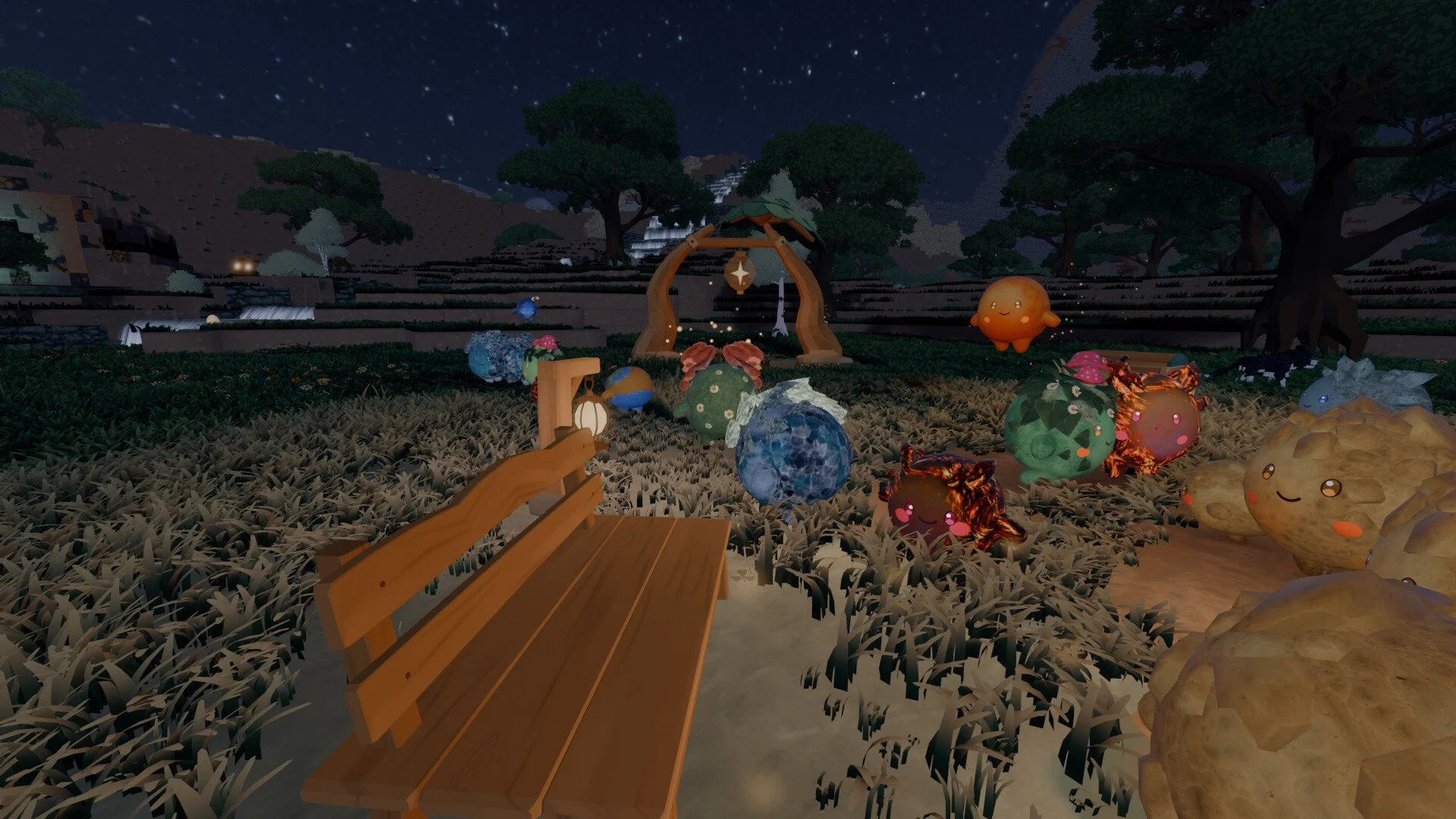
In Luminids, you can spend time shaping the landscape, laying paths and constructing an entire village from above, then step directly into that same environment in first person.
Suddenly, everything changes.
That little house you placed becomes somewhere you can walk up to. The forest becomes somewhere you can wander through. The creatures you were previously observing from a distance are now standing in front of you, reacting to your presence.
And I think that changes the emotional relationship enormously.
You're no longer just looking at a simulation. You're experiencing the consequences of your own creativity from within it.
There's also something quite powerful about perspective itself.
From above, a colony is a system. From the ground, it's a home.
I wanted both experiences to coexist because I think the contrast between them is where much of the emotional connection comes from.
Ultimately, I don't want people simply to build a beautiful world. I want them to feel what it's like to live inside something they've created.
6. Systemic Depth: Complexity Without Constant Pressure
PROC3SS: Colony-building games often derive their complexity from resource scarcity, optimization, and the consequences of poor decisions. Luminids retains systems such as farming, crafting, and resource gathering while deliberately reducing survival pressure. How do you prevent these activities from becoming purely decorative, and where do you see the game's mechanical depth emerging as players become more experienced?
Nick Jacob: I think there's a misconception that removing survival pressure necessarily removes mechanical depth.
In reality, they're two separate things.
You can have intricate systems involving resource management, farming, construction, production, exploration and autonomous behaviour without needing to punish the player for making mistakes.
Luminids still has an interconnected economy. Food is consumed, resources need gathering, structures need building and the colony needs to organise itself around these activities.
The difference is that I'm trying to make those systems meaningful through progression, cooperation and discovery rather than constant scarcity.
For example, farming begins as something the player participates in directly. Over time, as the colony develops, the Luminids gradually learn to take on more of those responsibilities themselves.
You're not simply increasing production numbers. You're helping a community become more capable and independent.
Beyond that, there's the wider world to explore, with nine distinct realms, hidden locations, resources to discover and a central story involving the restoration of the Ark.
As players become more experienced, I want the depth to come from understanding how their colony works, how the creatures interact, how the environment shapes their behaviour and what new possibilities emerge as their settlement grows.
There's also the creative dimension. Terrain manipulation, settlement planning and construction give players considerable freedom to create something that's distinctly their own.
The challenge is ensuring those systems interact, rather than becoming isolated activities that simply look nice.
That's something I'm continually testing and refining.
I don't want Luminids to be mechanically shallow. I want it to be mechanically rich without becoming emotionally exhausting.
7. Independent Development: The Challenges of Building Luminids
PROC3SS: Developing a colony simulator with persistent characters, emergent behavior, and a fully explorable world seems particularly ambitious for a solo developer. What has been the greatest technical or creative challenge so far, and how has the experience of building Luminids independently influenced the scope and direction of the project?
Nick Jacob: Where do I start!
Building Luminids independently has probably been one of the most technically demanding and personally challenging things I've ever undertaken.
My background is in software engineering, architecture and leading large technology programmes, so I'm accustomed to working with complicated systems.
But creating a game of this scale almost entirely by yourself is a completely different experience.
I'm working in Godot, with substantial custom systems and C++ engineering, trying to bring together a large seamless world, terrain manipulation, simulation, character behaviour, construction, exploration and all the little details that make somewhere feel alive.
And all of those systems have to work together at a reasonable frame rate.
Performance has been an enormous challenge, particularly because I want the world to feel populated and alive without sacrificing the visual atmosphere that makes Luminids what it is.
The character simulation has required some significant architectural changes too. At one point I completely replaced the underlying behaviour-tree architecture because it was becoming too restrictive for the kind of autonomous, stateful characters I wanted to create.
I've also made some fairly substantial creative decisions along the way.
Originally, Luminids was heading towards a much more expansive, procedurally generated world. Eventually I realised that an infinitely large world isn't necessarily a meaningful one.
So I changed direction towards a single, cohesive island with nine distinct realms, each with its own identity and atmosphere.
I think that's one of the advantages of independent development. You can make difficult creative decisions without having to navigate layers of organisational approval.
But the other side of that freedom is responsibility. Every system, every design decision, every technical problem ultimately comes back to you.
It's certainly taught me a lot about discipline, prioritisation and knowing when something needs to be simplified or rebuilt.
And I won't pretend everything is finished or that every ambition has already been realised. Luminids is still evolving, and Early Access is an important part of that journey.
But perhaps the biggest influence of developing independently is that I've been able to preserve the original intention behind the project.
Luminids isn't being designed around monetisation strategies, engagement metrics or the need to satisfy a particular genre formula.
It's being built around a fairly personal belief that games can offer something beyond competition, optimisation and endless stimulation.
I want to build a world that people don't just enjoy playing, but enjoy being in.
And if I can make someone feel a little happier, a little calmer, or simply give them somewhere beautiful to escape to for an hour, then all the engineering, the late nights and the challenges will have been worth it.
A World Worth Exploring
Luminids presents an intriguing alternative to the conventional colony-building formula, placing autonomy, cooperation, and emotional attachment at the centre of its design. Jacob's answers reveal a project driven by a clear creative philosophy, one that seeks to make the relationship between player and simulated inhabitants feel more personal through interconnected systems and emergent behaviour. While the game remains in development, players interested in exploring this approach can now experience it firsthand, as Luminids has a live, playable demo available on Steam. Those wishing to support its development can also visit the Luminids Kickstarter campaign or learn more through the official website.
